


Express Delivery
|
Same day Delivery in (Saudi Arabia, Qatar, UAE, Kuwait)
|
2 business days (Oman, Bahrain)
|
2-3 business days (All other countries)
|
 |
|
|
Express Delivery
|
Same day Delivery in (Saudi Arabia, Qatar, UAE, Kuwait)
|
2 business days (Oman, Bahrain)
|
2-3 business days (All other countries)
|
|
|
VETERINARY EYE CENTER – CT | GREENWICH, CONNECTICUT
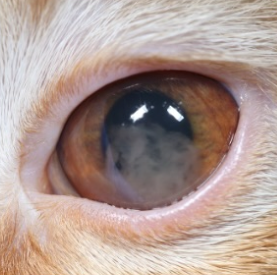
This cat's eyes
are sending an SOS.
FIP & uveitis:
The ocular signs that could save a cat's life.
The ocular signs that could save a cat's life.
A guide for cat owners & referring veterinarians
UNDERSTANDING FIP
What Is FIP?
Feline Infectious Peritonitis (FIP) is caused by a mutated feline coronavirus (FCoV) that triggers a fatal (if left untreated) systemic inflammatory response.
Most common in young cats under 3 years old
THE GOOD NEWS:
FIP is no longer a death sentence! Antiviral treatment (GS-441524) has recently transformed outcomes, with cure rates >85% when caught early.
Early detection is everything!
The eye may be your earliest diagnostic clue.
The eye may be your earliest diagnostic clue.
THE OCULAR CONNECTION
FIP & The Eye
Why does FIP cause uveitis?
How it happens:
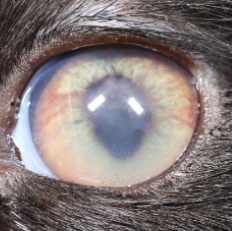
FIP deposits immune complexes in the uveal tract's blood vessels → vasculitis → uveitis. Anterior, posterior, or panuveitis can result.~30-40% of FIP cats develop ocular involvement
There are 2 forms of FIP: Wet and Dry
Ocular FIP can occur in both forms but is more common in the dry form
WET FORM
Effusions +/- ocular signsDRY FORM
Eye signs may be the ONLY finding!CLINICAL SIGNS — FOR DVMs & CAT OWNERS
Ocular Signs of FIP
Findings that should trigger FIP on your differential (especially in a young cat)
Aqueous Flare
Cloudy, hazy anterior chamber from protein-rich inflammatory fluidKeratic Precipitates
White inflammatory deposits (KPs) on the inner corneal surfaceFibrin or hypopyon
White strands, clouds, or settled inflammatory material in the anterior chamberRubeosis iridis
Neovascularization and inflammation of the iris leading to reddened colorChorioretinitis
Retinal and choroidal inflammation visible on fundoscopic exam. Possible subretinal effusion and retinal detachment.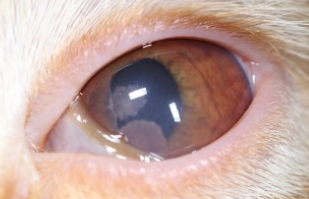
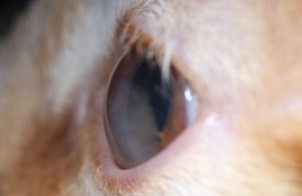
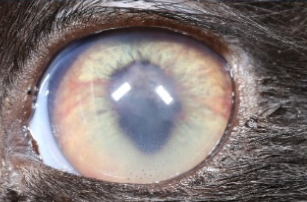
⚠️ In the dry form, uveitis may be the ONLY presenting sign — don't miss it.
FOR CAT OWNERS
⚠️ Watch For These Signs
When to call your vet — and ask about FIP
Increased cloudiness/haziness of either eye
Squinting, tearing, or pawing at the face
Red or inflamed whites of the eye(s)
Signs of vision loss: bumping into objects, hesitation in dim light
Systemic signs: weight loss, lethargy, fever, or distended belly
TREATMENT UPDATE
FIP Is Now Treatable!
Early diagnosis opens the door to lifesaving antiviral therapy.
GS-441524 antiviral therapy
has transformed FIP from a near-universal fatality into a manageable disease. Sustained remission rates >85% are reported when treatment begins early.Add uveitis treatment if present:
Topical anti-inflammatories such as prednisolone acetate+ Cycloplegic (if IOP appropriately low)
+ Additional pain management PRN
- Ocular signs may appear BEFORE systemic illness develops
- A thorough eye exam can be the first step toward FIP diagnosis
- Earlier treatment initiation = higher likelihood of cure
FOR REFERRING VETERINARIANS
🩺 When to Refer
Clinical Pearl:
Uveitis in a young cat with any systemic illness? Put FIP at the top of your differential. When in doubt, refer early!Refer when you see:
- Any uveitis in a cat < 3 years, especially with systemic signs
- Aqueous flare, hypopyon, or keratic precipitates on exam
- Unexplained iris color change or chorioretinitis on fundoscopy
- Ocular signs not responding to standard uveitis management