

 |
|
|
|
Remove 20% of abdominal fluids.
Remove all chest fluids
What is FIP? – FIP is caused by a common and a largely innocuous enteric coronavirus, like those causing colds in humans and diarrhea in foals, calves, and poultry. Most cats are infected with the feline enteric coronavirus (FECV) at about 9 weeks of age and may be reinfected numerous times before reaching 3 years of age, when cycles of infection become less frequent. Specific mutations that allow FECV to escape the cells lining the lower intestine and infect the most basic cell of the immune system, the macrophage, will occur in about 10% of infections. However, this macrophage infection is eliminated in all but 0.3-1.4% of cats. Predisposing conditions that lead to disease in this small proportion of cats involve young age, genetic susceptibility, sex, overcrowding, poor nutrition, and a number of stressful environmental events. The initial site of disease is in the lymphoid tissue in the lower small intestine, cecum, and proximal colon. Infected macrophages leave these initial disease sites and migrate locally and in the bloodstream to small veins in the linings of the peritoneal cavity, the uveal tract of the eye, the ependyma and meninges of the brain and spine. Disease signs manifest within days, several weeks, sometimes months, and rarely a year or more. The form of disease that is manifested is referred to simply as wet (effusive) or dry (non-effusive). These two forms are easily distinguishable, although there may also be transition forms between the two. Some cats may present with signs of dry FIP but later develop wet FIP, or vice versa. Overall, about two thirds of cats will present with wet FIP and one-third with dry FIP. The duration of illness to death, usually from euthanasia, in the past was only a matter of days or weeks. Less than 5% of diseased cats, mainly those with milder forms of dry FIP, will survive longer than one year with the best symptomatic care.
FIP manifestations and forms
Clinical manifestations of FIP- The clinical manifestations of wet (Table 1) and dry (Table 2) FIP vary according to the site(s) of in the body where infected macrophages end up and cause inflammation. The intensity and character of the inflammation is responsible for the disease form. Wet FIP is the more acute and severe form of FIP and is characterized by accumulation of inflammatory fluid either in the abdominal cavity and/or chest cavity. Involvement of the central nervous system (CNS) and eyes is relatively uncommon in the wet form of FIP (Table 1). The dry form of FIP is characterized, not by diffuse inflammation and fluid effusion, but rather by less numerous and more tumor-like lesions (i.e., granulomas) in organs (e. g., kidney, cecum, colon, liver, lung, lymph nodes) within the abdominal or thoracic cavities, or in the eyes and brain (Table 2). Whereas the brain and/or eyes are only involved in 9% of the wet cases, neurological and-or ocular disease is seen as the main presenting clinical sign in 70% of cats with dry FIP.
Table 1. Variability in clinical signs of effusive (wet) FIP from cats necropsied at UC Davis
Signs referable to – % affected.
Peritoneal cavity – 58%
Peritoneal & pleural cavity – 22%
Pleural cavity – 11%
Peritoneal cavity, eyes – 2.8%
Peritoneal cavity, CNS* – 1.9%
Peritoneal and pleural cavity, CNS – 0.9%
Peritoneal and pleural cavity, eyes – 0.9%
Pleural cavity, CNS, eyes – 0.9%
Peritoneal cavity, CNS, eyes – 0.9%
________________
*Central nervous system (brain, spinal cord)
Table 2. Variability in clinical signs of non-effusive (dry) FIP from cats necropsied at UC Davis
Signs referable to – % affected.
Peritoneal cavity – 30%
CNS – 22%
Eyes – 14%
CNS & eyes – 8%
Peritoneal cavity, eyes – 7%
Peritoneal & pleural cavities – 4%
Peritoneal & pleural cavities, CNS – 3%
Peritoneal & pleural cavities, eyes – 2%
Peritoneal cavity, CNS, eyes – 2%
Pleural cavity – 1%
The blood-to-brain and blood-to-eye barriers
Background- The eye and central nervous system (CNS) are protected from harmful substances/agents by blood-to-eye and blood-to-brain barriers. These barriers have great evolutionary significance because they protect both brain and ocular functions from the effects of systemic toxins and infectious agents. Such barriers evolved over millions of years by positive selection for the fittest. The blood-to-brain barrier in cats will exclude around 80% of most drugs, while the blood-to eye barrier excludes about 70%. Therefore, if a given dose of drug such as GS-441524 achieves an effective blood (plasma) level of 10 µM, the levels in the brain (cerebrospinal fluid) will be only 2 µM and the level in the eye (aqueous humor) only 3 µM. There are several other aspects of these two blood barriers that need to be considered. First, their efficiency at excluding unwanted substances and agents varies between individuals. Second, the efficiency of this barrier will decrease in inflamed tissues and increase as inflammation subsides. This is good in the early stages of disease but bad for treatment in the final stages when the inflammation is gone and only the virus is left. Thirdly, there is no simple, safe, or effective means to decrease these barriers and the only way to increase drug levels in brain or eyes is to increase their levels in blood plasma by giving a higher dosage orally or parenterally.
How these barriers effect the forms of FIP- Paradoxically, the ocular and neurological forms of FIP are also a result of these same barriers, but in this case of neurological and/o ocular FIP, the impediment is to the entry of antibodies and immune lymphocytes. The phenomenon of neurological disease following a common systemic virus infection is well known in humans and animals. The prime example is polio-encephalomyelitis in people and canine distemper in dogs. The polio virus is a common enteric pathogen and usually causes an inapparent or mild intestinal infection. However, in some people the virus also escapes to the brain and spinal cord. People mount a vigorous systemic immune response to the polio virus, which is highly effective in eliminating the virus in parts of the body except for the nervous system, where the blood-to-brain barrier limits is an impediment to immunity. These unfortunate people will develop the classical neurologic form of the infection. A similar phenomenon occurs with canine distemper. The canine distemper virus, which is closely related to the human measles virus, causes an acute respiratory infection in young dogs that manifests 7-14 days after exposure and lasts for a week or two. Most of these dogs will completely recover, but a proportion will develop neurological disease three or more weeks later. This highly fatal secondary form of canine distemper is caused by virus that escaped into the brain and spinal cord during the respiratory phase of infection and is shielded from the host’s immune system by the blood-to-brain barrier.
The compartmentalization of disease between CNS and other parts of the body may also explain why blood tests are less likely to be abnormal in cats presenting with primary neurological disease or that have relapsed to these forms either during or after treatment for non-neurological FIP. It appears that inflammation within privileged sites like the CNS are less likely to evoke a systemic inflammatory response and to cause significant changes in hematology, increases in total protein and globulin, and decreases in albumin and A:G ratio.
Preliminary diagnosis of ocular and neurological FIP
Preliminary diagnosis -. Ocular and neurological disease is much less common in cats with wet than dry FIP (Tables 1, 2). They also occur in primary and secondary forms. Primary disease accounts for about one-third of dry FIP cases (Table 2) and lesions outside of the eyes and central nervous system (CNS) are either not present or not readily discernible. Secondary neurological and ocular forms of FIP have become much more common as a result of antiviral drug treatment and occur either during the course of initial treatment for the common extra-ocular/CNS forms, or in the form of a relapse during the 12 week post-treatment observation period.
The initial suspicion of neurological and/or ocular FIP is based on the age, origin and presenting clinical signs. FIP occurs mainly in cats under 7 years of age, three-fourths under 3 years and with the highest incidence between 16 weeks and 1-1/2 years. Common presenting signs with both ocular and neurological FIP were retarded growth in kittens and adolescent cats, weight loss in adults and vague signs of ill-health often associated with fever.
The diagnosis of FIP, especially the dry form, is assumed to be difficult. However, a preliminary diagnosis is relatively easy to make given the stereotypic signalment, clinical histories, and physical findings and the rarity of confusing diseases in the highest FIP risk group. The neurological and/or ocular forms of FIP can be confused with feline systemic toxoplasmosis, which is why so many cats with these forms of FIP are tested for toxoplasmosis and treated with Clindamycin. However, systemic toxoplasmosis is an exceedingly rare disease of cats, especially when compared to FIP. FIP can be easily differentiated by a cat’s origin (cattery, foster/rescue, shelter), signalment (age, gender, breed), and basic blood test results. Deep fungal infections (coccidioidomycosis, blastomycosis, histoplasmosis) can cause ocular, and sometimes neurological signs, similar FIP but are still uncommon even in their endemic regions. Lymphoma may also be a differential diagnosis for dry FIP, but this disease is usually sporadic and in older cats. Several congenital disorders may also present with progressive neurological signs but these are mainly in younger cats and not associated with the inflammatory manifestations of infectious diseases such as FIP, toxoplasmosis, or the deep mycoses.
Ocular FIP signs– Ocular disease occurs as a sole or primary presenting sign in about one-third of cats with dry FIP and in association with extra-ocular lesions in two thirds of cases (Table 2). Ocular disease is an uncommon manifestation in cats presenting initially with wet FIP (Table 1). The initial clinical manifestation is unilateral or bilateral anterior uveitis manifested by change in iris color, cloudiness, and flocculant debris in the anterior chamber, keratic precipitates on the back side of the cornea, and anisocoria. Retinitis is an accompanying feature in a proportion of cats and manifested by focal tapetal hyporeflectivity associated with local inflammation, and microhemorhage of retinal vessels. Less than one-third of cats with ocular FIP will also manifest vague or definite neurological signs (Table 2). Glaucoma, unilateral or bilateral, and panopthalmlitis occur in some cases and may result in enucleation.
Neurological FIP signs– The same prodromal signs associated with FIP occur in cats that manifest neurological disease, but include vague signs of dementia, aggressive behavior, compulsive licking at inanimate objects and other cats, reluctance to jump, spontaneous muscle twitching, abnormal swallowing motions, and occasionally seizures. Later signs include posterior ataxia, physical and auditory hyperesthesia, hyperreflexia, and cerebellar-vestibular signs (crossed-extensor reflex, loss of conscious proprioception), seizures, and increasing incoordination and dementia. Signs of spinal involvement often include fecal and/or urinary incontinence, paralysis of tail and hindlegs, pain over lower back. Catastrophic decerebrate signs have also been associated with sudden and severe herniation of the brain into the spinal cord.
Confirmatory tests for ocular and neurological FIP
Background– A definitive diagnosis of FIP is by identifying the presence of viral antigen or RNA within macrophages within typical effusions or lesions by PCR or immunohistochemistry (IHC). A definitive diagnosis can be a difficult and expensive process in many cats and PCR/IHC may be falsely negative in up to 30% of specimens. However, it is not necessary in most cases to meet this level of proof. A strong collection of historical, physical, and less direct laboratory abnormalities can suffice to establish a diagnosis.
Laboratory signs -A diagnosis of ocular and neurological FIP can usually be made with linking characteristic changes in cerebrospinal fluid (CSF) and aqueous humor (high protein, high cells, neutrophils, lymphocytes, macrophages), with suggestive abnormalities in history, physical exam, CBC, serum chemistry panel, or MRI. Total protein concentration is often increased (mean, 9.4 g/L; median, 3.6 g/L; range, 0.85–28.8 g/L) as is the total nucleated cell count (mean, 196/μL; median, 171/μL; range, 15–479/μL). Neutrophils are the dominant inflammatory cell in most cats, while lymphocytes and a mixture of neutrophils and lymphocytes are observed in a smaller proportion.
MRI is a useful tool for diagnosis of neurologic FIP, particularly in combination common signalment/history, typical clinical signs, and CSF analysis. Three distinct clinical syndromes have been identified MRI findings were described in 24 cats with necropsy confirmed neurological FIP (Rissi DR, JVDI, 2018,30:392–399): 1) T3-L3 myelopathy, 2) central vestibular syndrome, and 3) multifocal CNS disease. MRI abnormalities including meningeal contrast enhancement, ependymal contrast enhancement, ventriculomegaly, syringomyelia, and foramen magnum herniation were detected in all cases. 15 cases and consisted of hydrocephalus (10 cases), cerebellar herniation through the foramen magnum (6 cases), cerebral swelling with flattening of gyri (2 cases), and accumulation of fibrin within ventricles (2 cases) or leptomeninges (1 case). Histologically, 3 main distinct distributions of neuropathologic changes were observed, namely periventricular encephalitis (12 cases), rhombencephalitis (8 cases), and diffuse leptomeningitis with superficial encephalitis (6 cases).
In one study, the most useful antemortem indicator of neurologic FIP was a positive IgG anti coronavirus antibody titer in the CSF. Cats with CSF antibody titers of 1:640 or greater were found only in cats with FIP and were always positive by RT-PCR. Initial studies indicated that CSF antibody was produced, at least in part, within the CNS. However, antibody was detected only in cats with serum titers of 1:4,096 to 1:16,384 in another study and researchers concluded that CSF antibodies were passively acquired. In another attempt to measure local CNS antibody production in cats with FIP, an albumin quotient and IgG index were measured to determine whether proteins in the CSF were of blood or local origin. Neither the albumin quotient nor IgG index identified a pattern consistent with intrathecal IgG synthesis in cats with the CNS form of FIP. In conclusion, it seems that coronavirus antibodies enter the CSF at high levels when they are also at high levels in the serum. Indeed, serum coronavirus antibody titers by IFA in cats with ocular and neurological FIP tend to be among the highest for any form of FIP.
PCR, when done on CSF and aqueous humor with higher protein and cell counts, is highly sensitive and specific for ocular and neurological FIP. It is recommended, however, that only the PCR test targeting the FCoV 7b gene be used and not the less sensitive PCR for FIPV specific mutations in the S gene. The FCoV 7b gene is often used for PCR because it is the most abundant viral transcript and most likely to be detected. The FCoV M gene has also been targeted in some PCRs, as it is highly conserved across all isolates, but transcripts are less abundant than for the 7b gene. Immunohistochemistry on cells collected from spinal fluid is equally sensitive and specific to PCR on samples with higher protein and cell counts. Antigen is localized specifically to macrophage appearing cells.
The rapid response of FIP to GS-441524 is being used more frequently as a confirmatory test. However, this should only be used when other evidence is strong, but no simpler or less expensive means are available to aid the diagnosis.
Treatment of ocular and neurological forms of FIP
Viral specific inhibitors– Inhibition of viral genes regulating specific stages of infection and replication have become the mainstays of treatment for chronic RNA virus infections of humans such as HIV and hepatitis C virus. At this time, two classes of antiviral drugs have proven effective against FIP. The first class consist of inhibitors of RNA synthesis and include the nucleoside analogues GS-441524 (the active ingredient of Remdesvir) and EIDD-2801 (Molnupiravir). The second class of drugs consist of viral protease inhibitors such as GC376 (a prodrug of GC373) and Nirmatrelvir (prodrug of a nitrile modification of GC373). Protease inhibitors are much less efficient at crossing the blood to brain or blood to eye barriers than the nucleoside analogs and are the not advised for treatment of neurological or ocular FIP.
https://www.youtube.com/watch?time_continue=3…
DR P ON 84 DAY TREATMENT PROTOCOL
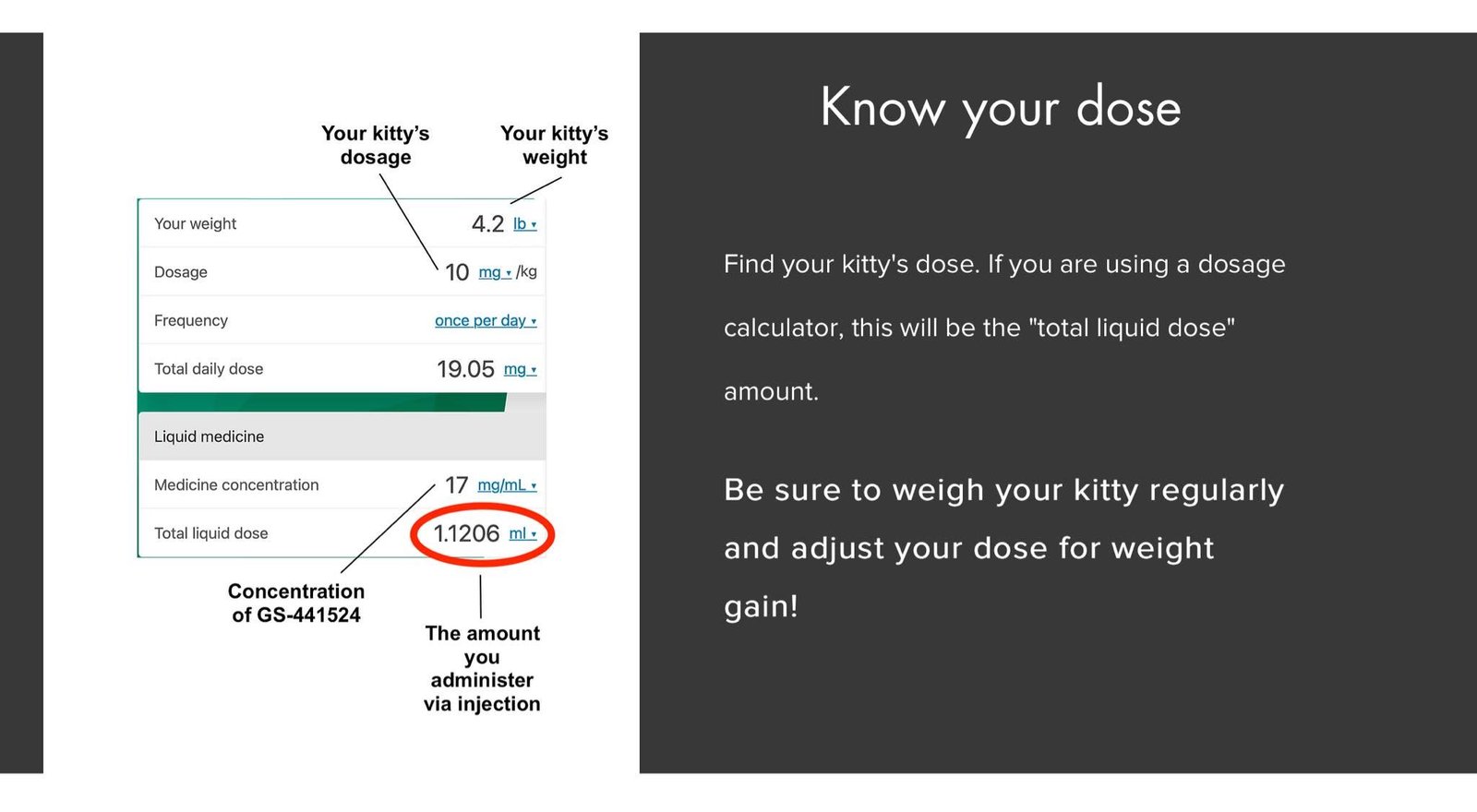
Know your dose. Find your kitty’s dose; if you are using a dosage calculator, this will be the “total liquid dose” amount (which is the amount you administer via injection, calculated based on your kitty’s weight, their prescribed dosage, and the medicine concentration of GS-441524). Be sure to weigh your kitty regularly and adjust your dose for weight gain!
also we believe that it is about total daily dosage on the body.
Especially at the beginning of treatment one should never decrease total daily dosage even if the cat loses weight because as with other medications it’s also about presence of the actual molecule where the virus is.
And if the weight loss was due to partial response to treatment then decreasing total daily dosage would allow the FIP virus to take the upper hand.
At the dosages used today there is not risk for cats so keeping the same total daily dosage is the safest course.
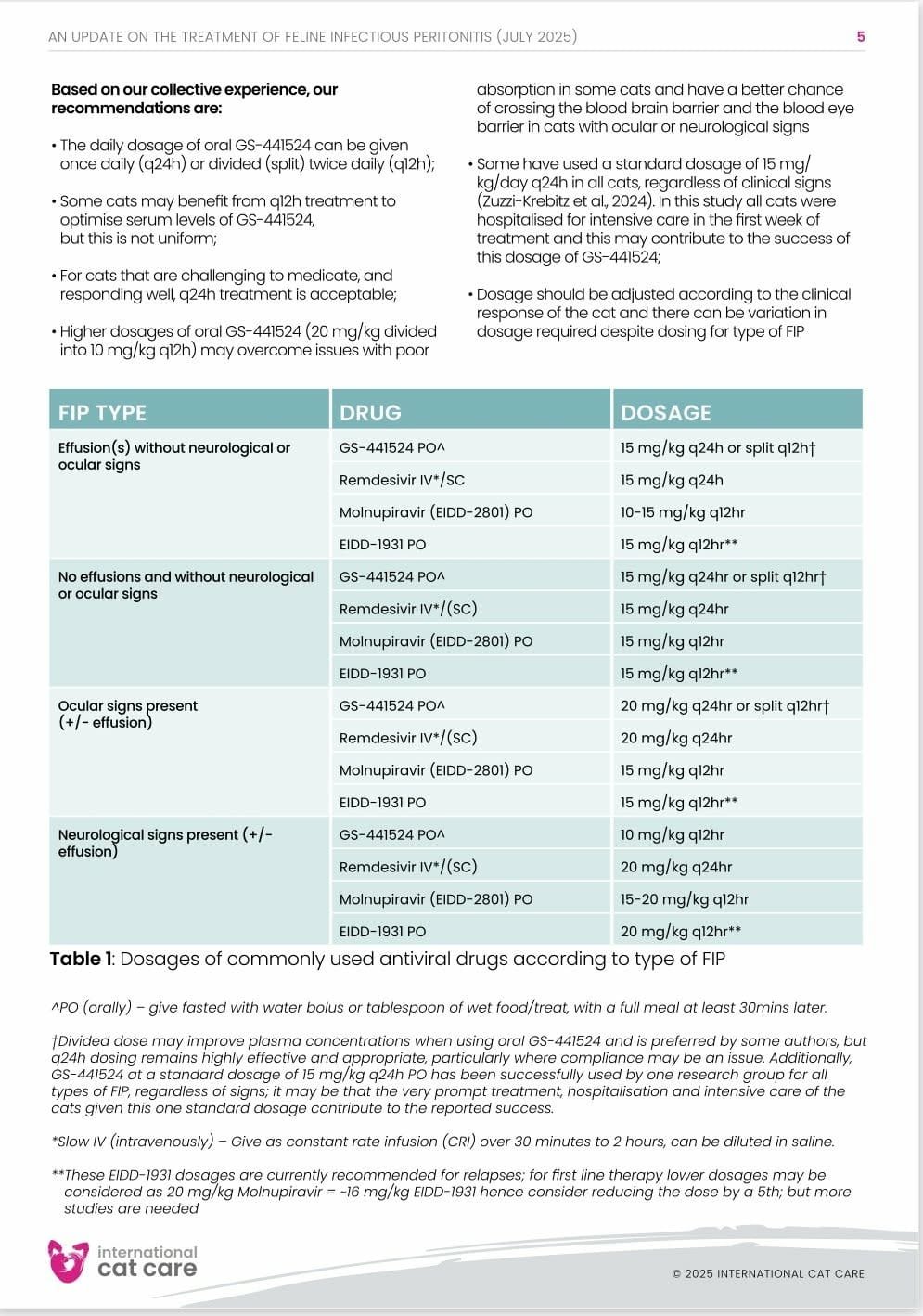
GS-441524 treatment– GS-441524 has become the drug of choice for treatment of cats with all forms of FIP, and injectable (SC) and oral forms are available from the unapproved Chinese market. However, oral absorption is less than 50% efficient compared to injection, thus requiring a dosage of oral GS-441524 twice as high. Suppliers of oral GS-441524 hardly ever divulge the actual concentration of GS-441524 in one of their tablets or capsules, but rather label them as what they believe to be an equivalent injectable dose. The efficiency of absorption of oral GS also has an upward limit, making it more difficult to achieve the higher blood levels needed to get sufficient levels of drug into the brain and eyes. Therefore, if poor results are obtained in cats with ocular and neurological disease even at high equivalent dosages of oral GS-441524, injectable GS-441524 should be substituted before contemplating a change to a drug like molnupiravir.
The starting dosage for cats with wet or dry FIP and no ocular or neurological disease signs is 8 mg/kg, subcutaneously (SC), daily for 12 weeks, with the younger and wet cases tending to go toward the lower end and the dry cases toward the higher end. Cats with ocular lesions and no neurological signs start at 10 mg/kg daily for 12 weeks. Cats with neurological signs start at 10 mg/kg, daily for 12 weeks. If cats with wet or dry FIP at the beginning develop ocular or neurological signs they go to the appropriate ocular or neurological dosage. The GS dosage be adjusted weekly to account for weight gains. Weight gain can be tremendous in many of these cats, either because they are so wasted at the start or that they their growth has been stunted. Failure to gain a good amount of weight during treatment is considered an unfavorable sign. The starting dosage is not changed unless there is significant reasons to do so, such as failure to grow or for abnormal blood test values to improve, poor activity levels, poor improvement in coat and flesh, or change in disease form to include ocular or neurological signs. If there are good reasons to increase the dosage, it should always be from +2 to +5 mg/kg daily depending on degree of remaining abnormalities and for a minimum of 4 weeks. If 4 weeks extends the 12-week treatment time, the treatment time is extended to accommodate. One should expect a positive response to any increase in the dosage and a failure to see improvement indicates that the dosage is still not high enough, drug resistance is occurring, the brand of GS is not what it should be, the cat does not have FIP, or there are other diseases confusing the treatment.
One of the most difficult decisions is to determine when to stop treatment. Although some cats, often younger ones with wet FIP, can be cured in as little as 8 weeks and possibly sooner, the usual treatment time is 12 weeks. Some cats may even require dosage adjustments and even longer treatment periods. Critical blood values such as hematocrit, total protein, albumin and globulin levels, and absolute lymphocyte counts usually normalize in cats destined for cures at 8-10 weeks, at which time there is often an unanticipated increase in activity levels. It is believed, but not proven, that 8-10 weeks in when the cat’s own immunity to the infection occurs. This is a situation that occurs with hepatitis C treatment in people, which is also a chronic RNA virus infection that often requires up to 12 weeks or more of antiviral drug treatment.
Cats with ocular disease, and no neurological involvement, have a rapid response to GS and full recovery of vision with minimal or no residual damage in as little as two weeks is expected. Cats that present with neurological abnormalities, develop neurological disease during treatment for other forms of FIP, or manifest neurological signs during the 12-week post-treatment observation period, also rapidly improve but the dosage is much higher, the treatment period often longer, and the cure rate somewhat lower. Treatment failures in cats with neurological FIP are due either to inadequate treatment or the development of drug resistance.
Unfortunately, there is no simple blood test that will determine when a cure has occurred in cats with neurological involvement. Many cats with neurological FIP have minimal blood abnormalities, especially those with primary neurological FIP, and abnormalities are often absent by the end of treatment even when residual sites of inflammation still exist in the brain or spinal cord. Furthermore, a proportion of cats that are cured of their infection will have minor to moderately severe neurological deficits that are residual effects of earlier disease. These facts make it difficult to use either blood test results or residual neurological deficits as indicators of a cure or inadequate treatment. Although a thorough ocular exam can visibly clear an eye of active disease signs, only an MRI, preferably with cerebrospinal fluid analysis can determine the true disease status in brain and spinal cord. These procedures are expensive, not available to everyone, and may not provide definite evidence that the infection in the CNS has been eliminated.
Relapses usually involve infections that have escaped to the central nervous system (brain, spine, eyes) during treatment for wet or dry FIP not accompanied by neurological or ocular signs. The dosage of GS-441524 used to treat these forms of FIP are often insufficient to effectively overcome the blood-to-brain or blood-to-eye barriers. The blood-to-brain barrier is even more effective than the blood-to-eye barrier, which explains why eye lesions can be more easily cured than brain and/or spinal infections. Relapses that occur in the post treatment period, and that involve, eyes, brain or spine are usually retreated for at least 8 weeks at a starting daily dosage at least 5 mg/kg higher than the dosage used during the primary treatment (e.g., 10, 12, 15 mg/kg daily). Cats that cannot be cured of infection at dosages of as high as 15 mg/kg daily are likely to have developed varying degrees of resistance to GS-441524. Partial resistance may allow for control of disease signs, but not a cure, while total resistance is manifested by varying severity of clinical signs in the face of treatment.
Various modifications in the treatment have been created by different FIP treatment groups. Some groups will treat with an exceedingly high dosage of GS from the onset rather than escalating the dosage when indicated, capping off or extending the treatment with a high dosage during the last two weeks at a higher dosage on the hope that it may reduce the chances of relapse. Systemic prednisolone is often prescribed in addition to GS but should only be used temporarily to stabilize severe presenting disease. Systemic steroids will reduce inflammation but tend to mask the beneficial effects of GS and if used long enough, and at higher dosage, possibly interfere with the development of FIP immunity. It is believed that the re-establishment of FIP immunity is an important component of successful GS treatment. Therefore, some people advocate the use of interferon omega or non specific immunostimulants to further stimulate the immune system, and some employ even different modifications. There is no evidence that capping the treatment with an extra high dosage will improve cure rates. Likewise, interferon omega and non-specific immunostimulants have no proven beneficial effects on FIP when given as sole treatments or as supplements to GS. The practice of adding another antiviral drug, GC376 viral protease inhibitor, to GS treatment in cats developing GS resistance is also emerging and needs research. Finally, it is common for owners, treatment groups, and veterinarians to add in many supplements, tonics, or injections (e.g., B12) to bolster blood levels or prevent liver or kidney disease. Such supplements are rarely necessary in cats with pure FIP disease.
Molnupiravir (EIDD-2801)- Molnupiravir closely resembles GS-441524 but is a cytidine rather than adenine nucleoside analog. It is being widely used as an oral treatment for early cases of COVID-19 in humans but has been increasingly used to treat cats with FIP over the last 1-2 years. Because of toxicities observed in cats at higher dosages, and still unknown chronic side effects, it is most often recommended for cats that have developed resistance to GS-441524 during primary treatment or relapsed with neurological/ocular signs after a high dosage treatment with GS-441524. The fact that molnupiravir has a different resistance profile than GS-441524 is fortunate.
A safe and effective dosage for molnupiravir in cats with FIP has not been established by well controlled and monitored field trials such as those conducted for GC376 and GS-441524. However, an estimated starting dosage for molnupiravir in cats with FIP was obtained from published in-vitro cell culture studies of EIDD-1931 and EIDD-2801 and other laboratory and experimental animal studies. Molnupiravir (EIDD-2801) has an EC50 of 0.4 uM/µl against FIPV in cell culture, while the EC50 of GS-441524 is around 1.0 uM/µl. Molnupiravir starts to show cellular cytotoxicity at concentrations of 400 µM or greater, while GS-441524 is without toxicity at 400 µM. They both have similar oral absorptions of around 40-50%. The current recommended starting dosage for molnupiravir in neurological and ocular FIP is 8-10 mg/kg, orally, every 12 hours for 84 days. This may need to be raised to a maximum of 15 mg/kg orally every 12 hours depending on response to treatment. Toxicities to molnupiravir as indicated by changes in complete blood counts are likely to occur at higher dosages.
Causes of treatment failure
Improper dosage adjustments– It is important to start the treatment at the appropriate dosage and closely monitor it with frequent checks of temperature, weight, and outward signs of improving health. A CBC and serum chemistry panel that includes basic protein values (total protein, albumin, globulin (TP – Albumin = globulin), and A:G should be done at least monthly. Instructions for adjusting dosage is included in the section on GS-441524 treatment. Expensive serum protein electrophoresis does not add much more useful information.
Poor quality GS-441524- GS-441524 is not approved for marketing in any country and the source is a small number of Chinese chemical companies who sell it to distributors as a pure powder. Sellers dilute it for injection or prepare oral forms for sale under their brand names. There is no independent mechanism to assure the quality of the final product that is being sold to cat owners. Nevertheless, major providers of diluted forms for injection and/or oral preparations have been surprisingly honest and some even offer limited guarantees if treatment with one of their products fails to cure the disease. However, batches sold by some providers have appeared to be adulterated and some are not at the stated concentration. This can also vary between batches, probably because of problems with sellers having intermittent problems with their supply of raw GS and difficulties in meeting owner’s needs. Various FIP Warrior groups have good information on the most reliable brands.
Drug resistance- Resistance to GS-441524 can exist at the time of diagnosis, but this is uncommon. Rather, it tends to occur during treatment and is often partial at first and necessitates a higher dosage to accommodate for it. It can become total in some cats. Resistance is the biggest problem in cats with neurological disease, especially those that present with neurological disease or develop brain infections during treatment or within a few days or weeks after treatment has been completed. Many cats with partial drug resistance can be “treated” of their disease signs but will relapse as soon as the treatment is stopped, like HIV therapy. There have been cats successfully treated, partially or completely, for FIP disease signs for over a year with no cure. Resistance ultimately resistance becomes worse and disease signs worsen, the hardships of treatment on owner and cat becomes untenable, or the owner runs out of money.
GS-441524 treatment prognosis
Accurate data on GS-441524 cure rates are not yet available, but it appears that over 80% of cats with confirmed FIP can be cured. Treatment failures are due to incorrect diagnosis of FIP, inadequate treatment monitoring and dosage adjustment, complicating diseases, poor quality GS, GS resistance, or economic difficulties. The cure rate is somewhat lower in cats with neurological forms of FIP and in aged cats. Aged cats are more apt to have other chronic illnesses that either predispose cats to FIP or complicate overall health.
Cats with neurological FIP may suffer from permanent residual disease signs. This is most true for cats with spinal involvement and urinary and/or fecal incontinence or posterior paralysis. Hydrocephalus and syringomyelia are common complications of neurological FIP and they often persist to some degree even after the infection has been cured. Fortunately, most cats with neurological FIP will recover normal or near-normal function despite persistent evidence of hydrocephalus and syringomyelia. PDF FILE
FIP: a changing prognosis
Feline Infectious Peritonitis (FIP) results from a mutated feline coronavirus
Once considered uniformly fatal
Antiviral therapy has dramatically improved outcomes
Two key drugs discussed in practice: GS-441524 and Remdesivir
What’s the Difference?
| GS-441524 | Remdesivir (GS-5734) | |
| Drug type | Active antiviral | Prodrug of GS-441524 |
| Activation | Directly active | Requires metabolic conversion |
| Mechanism | Inhibits viral RNA polymerase | Inhibits viral RNA polymerase (via GS-441524) |
| Route | Oral or injectable | Intravenous |
| Typical use | Long-term treatment | Initial therapy in critical cases |
| Setting | Outpatient | Inpatient / hospital |
Why it matters clinically
Both drugs ultimately rely on GS-441524 for antiviral activity
Remdesivir may be preferred:
in unstable patients
when IV therapy and monitoring are available
GS-441524 is often favored:
for outpatient management
for ease of administration over prolonged courses
Current evidence suggests outcomes depend more on dose, duration, and compliance than on which of the two is used
General Guidance for Treating FIP Using
Veterinarian-Prescribed Compounded GS
DISCLAIMER
Please be advised that this guide is to be used for informational purposes only. It does not offer any
guarantee of warranty of any kind.
We are primarily cat parents whose cats are/were affected by FIP for which available effective treatment
is newly available in the United States via vet-prescribed compounded GS-441524. We are simply sharing
information that is otherwise available on the internet.
Please discuss and confirm ALL medications and treatment decisions with a licensed veterinarian before
proceeding with FIP treatment.
WE HEREBY DISCLAIM ANY AND ALL LIABILITY, RESPONSIBILITY, WARRANTY, REPRESENTATION,
GUARANTY AND/OR OBLIGATION OF ANY KIND WITH RESPECT TO ANY GS PRODUCTS OR
TREATMENT. FURTHERMORE, BY PARTICIPATING IN THIS GROUP IN ANY MANNER WHATSOEVER,
YOU IRREVOCABLY CONFIRM THAT YOU ARE ACTING IN YOUR OWN PERSONAL CAPACITY
AND AT YOUR OWN RISK, YOU ARE SEEKING INFORMATION AND GS PRODUCTS STRICTLY FOR
PERSONAL USE IN COMPLIANCE WITH ALL FDA RULES AND REGULATIONS AND YOU HEREBY
WAIVE, RELEASE AND RENOUNCE ANY AND ALL CLAIMS AGAINST THIS GROUP AND ITS
ADMINISTRATORS AND MODERATORS.
INTRODUCTION
Since June of 2024, veterinarians in the United States have been able to safely prescribe
pharmacy-compounded GS-441524 (see announcement here) under the conditions listed in
Guidance for Industry (GFI) #256 Compounding Animal Drugs from Bulk Drug Substances.
It’s available in both oral formulations and sterile injectables.
THE ANTI-VIRAL GS-441524, OR SIMPLY “GS”, CURES 85-90% OF CATS PROPERLY TREATED WITH IT
• Dr. Niels Pedersen’s, life-long research and dedication lead him to discover that GS cures FIP
• GS and Remdesivir (which you may have heard of for treating Covid in humans) are closely
related and nearly chemically identical
• ANY VETERINARIAN can prescribe GS and have the order filled in one of the participating
compounding pharmacies
• For support please join: https://www.facebook.com/groups/fipwarriorsoriginal
• Veterinarians please join: https://www.facebook.com/groups/572767364988893
HOW IS FIP DIAGNOSED?
• As there is no single definitive test for FIP at this time, looking at the symptoms the cat is presenting with, blood
work results, cat’s age, breed, environment (is it a stressful environment?) along with any diagnostics such as
x-rays, ultrasound, fluid PCR testing on ascites or pleural fluid, a diagnosis can be reached with confidence.
DO NOT RELY ON TITERS OR ANY CORONAVIRUS TEST – THEY CANNOT AND DO NOT DIAGNOSE FIP
• Vets may decide to treat diagnostically – which means putting the cat on GS without a FIRM diagnosis. If
improvements occur, you are likely on the right track. Waiting for extensive diagnostic results before starting
treatment can be catastrophic so it’s recommended to start as soon as FIP is being considered.
The exact dosing is determined by several factors:
• TYPE OF FIP
• CAT WEIGHT
• CONCENTRATION OF GS MEDICATION
• CO-MORBIDITES THAT MIGHT REQUIRE HIGHER DOSING
DURATION OF TREATMENT
• Treatment is generally 84 days, however this is not automatic as some cats may need to be treated longer based
on their blood work and clinical state.
• Do NOT stop treatment without doing final blood work reviewed by your vet and care team.
• After a cat has been cleared to begin the 12 week observation period, (ended treatment), cat is then monitored for
84 days for any signs of relapse. Relapses could present as the original symptoms which lead to the FIP diagnosis
or any other signs of cat not feeling well. Alert your veterinarian and care team should anything of concern arise
during observation.
• If no relapse occurs during the 84 days of the observation period, the cat will then be considered cured.
GENERAL DOSING GUIDELINES FOR COMPOUNDED ORAL GS
Compounded oral GS options state the TOTAL amount of GS in each pill, capsule or oral suspension.
50% of the total amount is considered the BIOAVAILABLE amount*
THAT MAKES THE RECOMMENDED PHARMACY-COMPOUNDED ORAL PROTOCOLS AS FOLLOWS**:
• 15mg/kg for Wet or Dry FIP
• 20mg/kg for Ocular or Neurological FIP
• 25mg/kg for Severe Ocular or Neurological FIP
IF CAT IS FIV+, FELV+ OR RECEIVED A SHOT OF DEPO-MEDROL, CONSIDER ADDING 5MG/KG TO THE DOSAGE.
FOR MULTIPLE CO-MORBIDIES, DISCUSS DOSAGE WITH YOUR VET AND CARE TEAM.
IMPORTANT INFORMATION ABOUT GIVING ORAL GS
• Ideally, the cat should fast overnight prior to taking oral meds and for one hour after taking them.
(A small squeeze treat or pill pocket can be used to give pills or capsules.)
• Do everything possible to NOT miss any doses.
• GS should be given everyday within an hour on either side of the set time.
• Dose should NOT be split unless dose is SO high that giving all at once makes the cat nauseous.
• Pills and capsules should not be crushed or dissolved; it’s best to give them whole.
• Some cats may need 2 doses a day, 12 hrs apart, for the first 3-5 days of treatment.
• Although vomiting is not a common side effect, if the cat vomits please follow this guidance:
• Vomiting within 0-1 hours after pills = give another full dose
• More than 1 hour after pills = no need to redose
• Dose needs to be adjusted up for weight gain or if new symptoms are observed.
– Please alert your veterinarian and care team to all weight gain.
– Dose is NEVER adjusted down for weight loss.
• If the cat has a feeding tube, please obtain instructions from your vet regarding administration of oral GS.
HELPFUL LINKS ON PILLING FOR PET OWNERS
Using a towel to wrap the cat like a burrito to administer medications can be helpful
https://www.dropbox.com/s/7qj7ejcm34i5z7f/Pilling%20A%20Cat%202.mp4?dl=0
https://www.dropbox.com/s/dpq79akactll06c/CatTakingCapsules.mp4?dl=0
* https://pmc.ncbi.nlm.nih.gov/articles/PMC10458979/
** https://pubmed.ncbi.nlm.nih.gov/36366527/
GENERAL DOSING GUIDELINES FOR COMPOUNDED INJECTABLE GS
Compounded INJECTABLE GS options state the TOTAL amount of GS per mL in each vial.
THAT MAKES THE RECOMMENDED PHARMACY-COMPOUNDED INJECTABLE PROTOCOLS AS FOLLOWS:
• 8mg/kg for Wet or Dry FIP
• 10mg/kg for Ocular or Neurological FIP
• 12mg/kg for Severe Ocular or Neurological FIP
IF CAT IS FIV+, FELV+ OR RECEIVED A SHOT OF DEPO-MEDROL, CONSIDER ADDING 5MG/KG TO THE DOSAGE.
FOR MULTIPLE CO-MORBIDIES, DISCUSS DOSAGE WITH YOUR VET AND CARE TEAM.
IMPORTANT INFORMATION ABOUT GIVING INJECTABLE GS
• If the cat is on INJECTABLE GS and part of the dose leaks after injecting, re-administer 1/2 the total dose
• If the cat is on INJECTABLE GS and most of the dose leaks after injecting, re-administer the full dose
• Leaks of INJECTABLE GS should be cleaned off of the fur and skin with mild soap and water and rinsed well
HELPFUL LINKS ON INJECTING FOR PET OWNERS
Using a towel to wrap the cat like a burrito to administer medications can be helpful.
How to get medication in syringe: Shots and purrito wrap:
https://m.youtube.com/watch?v=jCG3Aupy6z4 https://www.youtube.com/watch?v=hCUMeGEO79Y
Dr. Pedersen demonstrates shots: Purrito:
https://www.youtube.com/watch?v=okZ4V3JbCgo https://www.youtube.com/watch?v=9LiyxRXoJtA
SUPPORTIVE CARE
SUPPORTIVE CARE IS CRITICAL TO AN FIP PATIENT’S SURVIVAL
! The cat must maintain a minimum temperature of 99.5°f, do NOT feed if body temp is below 99.5°f.
Normal cat temperature is between 99.5-102.5°
! The cat MUST get between 200 (adult cats) – 250 (kittens) calories a day
! If the cat is not eating on its own, cat must be syringe fed. The following is recommended for syringe feeding:
• Tiki cat baby thrive (available at most pet stores)
• Tiki baby functions mousse, (available at most pet stores)
• Tiki cat veterinarian solutions (available through your vet by rx or at healthycatstore.com)
• Gerber baby food – Stage 2, meat only (available at your local grocery store)
• Hills A/D food (available through your veterinarian)
NEVER SYRINGE PLAIN WATER DUE TO RISK OF ASPIRATION
THE FOLLOWING MEDS CAN BE HELPFUL – PLEASE ASK YOUR VET:
• PREDNISOLONE (steroid for the first 1-2 weeks of treatment at guiding vet’s discretion)
NO DEPO MEDROL SHOULD BE GIVEN (For cats with cardiac issues, discuss with vet BEFORE using steroids.)
• CERENIA OR ZOFRAN (pill form) anti nausea medication – FIP can cause nausea even if cat is not vomiting.
• MIRATAZ (transdermal) an appetite stimulant to be used as needed.
• If the cat is dehydrated please discuss adding subcutaneous fluids to treatment with your veterinarian.
SUPPLEMENTS & ADDITIONAL MEDICATIONS:
• L-lysine is NEVER recommended during FIP treatment. Cats with FIP are immune compromised and the use of
L-lysine during treatment may negatively impact their immune system making them more susceptible to other
bacterial, fungal and viral infections.
• Probiotics can be beneficial during treatment. Visbiome, Proviable or Fortiflora Pro are all good options.
(Please consult with your vet and care team when deciding to add any supplements)
Please discuss the use of any and all medication and supplements with your veterinarian and care team.
FOR CATS WITH WET FIP – TO DRAIN OR NOT TO DRAIN
• BELLY FLUID: DO NOT HAVE ABDOMINAL FLUID DRAINED. Please discuss with your vet & care team.
• Draining all the abdominal fluid is very risky and can cause your cat to go into shock which may not be survivable.
• If fluid must be drained it should be no more than 20-30% and only if your cat’s belly becomes so full that eating,
bowel movements or breathing are affected.
• CHEST FLUID ABSOLUTELY MUST BE DRAINED if cat’s breathing is labored. This fluid can be drained completely.
• Consider running cytology on the fluid as well. This will provide information such as the protein content and
composition of the fluid. PCR tests on FIP fluid can result in up to 30% false negative results which is why
not much attention is paid to negative results if other factors are pointing to an FIP diagnosis.
WHAT REQUIRES A TRIP TO THE EMERGENCY VET/VET OFFICE
! Labored breathing, excessive panting, persistent cough
! Gums that are not their normal pink such as white, gray, or blue
! Seizures, loss of consciousness, or any strange behavior
! Diarrhea, if continuously bloody or cat crying while pooping
! Excessive sleepiness (cat can not be awakened, is unresponsive)
! Vomiting, if persistent, bloody, or kitty is continuously dry heaving
! Pain. If kitty is crying or is painful to the touch
! Body temperature below 98 degrees farenheit
! If cat has not urinated in 24 hrs (sometimes they will urinate in other places like their bed or blanket).
If you observe any of the above in your cat, head to nearest ER immediately. If you are working with an Admin or
care team, reach out if any of the above things are happening with kitty so they know you are headed to the ER.
COMMUNICATION IS KEY
Please reach out to your veterinarian and care team about any changes in your cat’s overall condition.
For example:
• Cat is not gaining weight
• Cat is refusing to eat or eating habits have changed significantly
• Changes in cat’s gait, wobbly walking, kitty is unable or hesitant to jump
• Eye cloudiness or discharge or change in pupil size
• Any changes to your cat’s skin
• If cat is sneezing or coughing
• Litter box issues such as incontinence or inappropriate urination (peeing outside the box)
Cat should be weighed often, ideally every 2-3 days around the same time using the same scale.
It’s recommend to use a digital baby scale (available at healthycatstore.com or elsewhere)
• Please check in with your vet as needed and your care team at least once a week to update and review progress.
• If you are taking your cat to the vet or if any new medications are prescribed, please alert your
BLOODWORK & RECOMMENDATIONS FOR TRACKING PROGRESS
Blood work (CBC and a chemistry panel) is recommended to be done at the following times:*
• Week 4 ( Day 28-30)
• Week 8 (Day 56-60)
• Week 12 (ideally between day 80-82 so results are in by day 84)
*If this bloodwork schedule is not feasible for financial reasons please let your vet and care team know so other
arrangements can be made.
DO NOT STOP TREATMENT UNTIL YOUR VET & CARE TEAM HAVE REVIEWED WEEK 12 BLOOD WORK RESULTS
THE FOLLOWING BLOOD WORK VALUES SHOULD BE IMPROVING THROUGHOUT TREATMENT:
• Neutrophils and Lymphocytes around a 50/50 ratio or below 8,000 for each.
• Eosinophils and Monocytes in normal range • A/G ratio at or close to 0.8 (MINIMUM 0.6)
• Total Protein in normal range • Bilirubin in normal range
• Albumin at at least 3.0 • Liver and kidney values in normal range
• Globulins under 5.0 • Anemia resolving
BLOOD WORK AND CLINICAL SYMPTOMS SHOULD ALL BE CONSIDERED WHEN MONITORING PROGRESS
SURGERIES/PROCEDURES/SPAYING, NEUTERING
• Please discuss with your vet (and alert your care team) if your cat is not spayed or neutered.
• 8 week blood work must show improvement and cat should not have any concerning clinical symptoms.
• Ideally procedures are done during week 9-10 (day 60-70) of treatment to ensure a full 2 weeks of GS follow.
• Alternatively, the cat can wait until after the observation period is done or extend treatment by 2 weeks post-surgery.
VACCINES DURING TREATMENT, OBSERVATION AND BEYOND
QUESTION: WHEN IS IT OKAY TO VACCINATE MY CAT?
Before making a decision, please discuss the risks/benefits of vaccinations with your veterinarian.
ANSWER: (FROM SEVERAL FIP WARRIORS VETS):
“There are many different answers, but if a cat has received ALL of its kitten shots including a rabies vaccine, then the
cat can wait a year from cure date to revaccinate or even skip vaccinating altogether.”
“Personally, I am making all my patients wait a whole year then will booster their vaccines and go every 3 years for
boosters. If a cat goes outdoors daily that increases health risks so then I’d probably want to vaccinate more often.”
“If cat has zero (0) rabies vaccines and needs one, I would still wait 6 months from cure date. If as a kitten, 2-3 FVRCP
vaccines and a rabies vaccine were given prior to getting FIP they are good for a year or more.”
“If kittens with zero (0) or only one (1) FVRCP and zero (0) Rabies are responding well to FIP treatment, strongly consider
an initial FVRCP vaccine and 3-4 weeks later, an FVRCP booster. I would use a mild immune booster – such as ProBoost
www.healthycatstore.com/product-page/proboost-30-pack – around the vaccines and I would do
vaccines at 10 days apart of anything else like deworming or anti-flea treatment.”
IMPORTANT ADDITIONAL NOTES
• You should see some positive changes within 24-48 hours, most clinical symptoms resolve within 2-4 weeks.
• If you do not see any changes in first few days please alert your vet and care team.
• During treatment it is very important not to make any changes to your cat’s lifestyle and try to minimize stress as
much as possible. Big parties, overnight guests, trips & vacations as well as the trips to the vet or anywhere else
(if you travel with your cat) should be done only when absolutely necessary.
• It is not recommended to vaccinate, have surgeries or deworm unless there is a specific need. Always discuss and
assess that with your vet and care team.
SUPPLIES SUGGESTED FOR USE DURING TREATMENT
These can be purchased through healthycatstore.com or elsewhere:
• Kitten or cat scale
• Quick read-digital thermometer and lubricant to use with the thermometer
• Needles, syringes, alcohol prep pads, sharps container if starting with injections
• Churus or your cat’s favorite squeeze treats/pill pockets
• Syringes for assisted feedings if needed
ENDING TREATMENT/GRADUATING INTO OBSERVATION
• The observation period following FIP treatment is 12 weeks or 84 days.
• Once cat has received 84 days (minimum) of treatment and been cleared for observation (based on blood work
results and clinical improvements), monitor the cat for any signs of relapse or illness over the next 12 weeks.
• During observation, please continue to monitor cat’s weight, appetite and energy level.
• If during this time you see ANY changes including fever, loss of appetite, lethargy, loss of balance or any other
prior symptoms of FIP please reach out to your vet and care team immediately.
• Please note these symptoms do not always mean a relapse but should not be ignored.
• Bloodwork is recommended halfway through treatment as well as at the end of the observation so the cat
can confidently be declared CURED of FIP.
CURED CAT – WHAT NOW?
• As your cat is now considered cured of FIP, you can go back to annual wellness visits and discuss
resuming vaccines with your vet.
• No further medications or supplements are required UNLESS prescribed or recommended by your vet.
ADDITIONAL RESOURCES / LINKS
https://everycat.org/ http://sockfip.org
https://www.fiptreatmentsupport.com/ https://www.zenbycat.org/
WHY MOLNUPIRAVIR (EIDD2801) & EIDD-1931 ARE NOT
RECOMMENDED OVER GS-441524 AS THE FIRST LINE OF
TREATMENT FOR CATS WITH FIP EVER
1. Knowledge of its usage is far less than for GS-441524.
2. There’s a narrow range of dosages that are high enough to be effective for a given cat but not so high as to be
toxic. The high toxicity means there’s little room for error when dosing.
3. Potential adverse effects include cytopenia, especially neutropenia, rarely pancytopenia, reduced
appetite/nausea, increased ALT enzyme activity and, potentialy, renal compromise as well as mutagenic side
effects with unknown outcomes.
4. It can cause immunosuppressive side effects aka low WBC – it shouldn’t be a first choice of treatment unless
the cat has already been treated with GS at doses >60mg/kg (30mg/kg absorbable) and showed resistance.
5. Molnupiravir (EIDD-2801) has been shown to impair bone and cartilage growth. For this reason, it’s not
recommended for use in human children and therefore not in young cats and kittens either. Ongoing studies
will evaluate if bone and cartilage impairment/toxicity is found in cats. There is a report of a cat that was
treated with Molnupiravir in 2021 and showed open physis at 2 years of age – well past the point this
should occur.
Veterinary feline experts who specialize in FIP, still refer to GS-441524 as the “gold standard” when it comes to
treating cats for with FIP. This is due to a number of factors, including a lack of studies on Molnupiravir/EIDD-1931
and the potential side effects of EIDD-1931. It is much safer to increase the dose of GS-441524 than it is to increase
the dose of EIDD-1931. There is also evidence in humans treated for COVID that resistance to Molnupiravir/EIDD-1931
develops more quickly than with GS-441524. (Dr. Sally Coggins, FIP Update 2024)
“It doesn’t appear to have the same safety margin as GS-441524…We can’t just keep giving more if it’s not
working, whereas with GS441524, quite often we will escalate doses considerably higher than those maintenance
doses. With Molnupiravir, we need to be a lot more judicious in terms of the actual dose that the animal’s receiving.”
– Dr. Sally Coggins, FIP Update 2024
“My preference is still GS-441524. I do still think that’s the better and probably safer drug. So if it’s not cost
prohibitive, keep them on GS-441524 orally” – Dr. Sally Coggins, FIP Update 2024
Example: The Cat may not responed to our 17.5 mg orange cover vials and responde to the 20 mg red cover vials and so on.
If your kitty is breathng fast or has labored breathing:
It could be a sign of pleural effusion — fluid surrounding the lungs, making it difficult to breathe. If this is the case, you should have the fluid drained — this may require an ER visit, and may need to be done a couple of times before fluid accumulation stops.
If your kitty has abdominal effusion:
Do not drain it unless it is interfering with breathing or other critical bodily functions. We don’t want to lose the proteins whcih will absorb back into the body during treatment, and draining a large volume of fluid at once can cause hypovolemic shock. If draining is necessary, try to limit it to about a third of the effusion volume.
Nutritional Support
It is critical that your kitty get enough calories, not just to support their recovery but because cats can get a serious liver disease if they stop eating for more than a few days. This condition is called “hepatic lipidosis” or “fatty liver” and is most common in overweight cats, although it can occur in any cat. When a cat goes without normal feeding, their body starts using fat for energy. If food isn’t provided in time, the fat can overwhelm the cat’s ability to break it down. The fat will then build up in the liver until it causes serious liver disease. We don’t need to add any more complications to deal with on top of FIP, so it is important to find ways to get your cat nutrition if they are not eating well. Typically this is an issue for a short time at the beginning of treatment.
It is critical that your kitty get enough calories, not just to support their recovery but because cats can get a serious liver disease if they stop eating for more than a few days. This condition is called “hepatic lipidosis” or “fatty liver” and is most common in overweight cats, although it can occur in any cat. When a cat goes without normal feeding, their body starts using fat for energy. If food isn’t provided in time, the fat can overwhelm the cat’s ability to break it down. The fat will then build up in the liver until it causes serious liver disease. We don’t need to add any more complications to deal with on top of FIP, so it is important to find ways to get your cat nutrition if they are not eating well. Typically this is an issue for a short time at the beginning of treatment.
Tips and Tricks to get kitty eating:
First of all, many FIP cats are nauseated, so ask your vet for an anti-nausea medication, such as Cerenia, or Ondansetron (Zofran). You can also ask for an appetite stimulant — Mirataz is a safe, easy to apply transdermal gel that you rub on their ear. Another great trick is to enhance the appeal of the food, for example warming food to make it more fragrant or sprinkling Fortiflora (a probiotic, see supplies page) or brewers yeast on food — these smell and taste great to cats and can encourage them to eat more. This is also a time when it’s ok to offer as much of their favorite foods or treats they are willing to eat until they are back to a normal appetite. Gerber Chicken Baby Food, Churu, tuna, and boiled chicken are all items that many cats will still show interest in even when their appetite is low.
If your cat is not eating at all, and especially if they have gone for an extended period of time without eating, consider asking your veterinarian to place a feeding tube. A nasogastric or esophegeal tube can be a easy and less stressful way to get nutrition into your cat temporarily. In either case, the cat can still eat on their own if they want, and once their appetite has returned, the tube can be easily removed. This can be a life-saver to get your cat over the hump until the antivirals have kicked in.
If your cat is not eating much, try to maximize the amount of calories in what they do eat. Ask your veterinarian for high-calorie convalescent food, such as Royal Canin Recovery, or Hills A/D formula foods. A fairly high-calorie non-prescription food is Royal Canin Mother and Baby Cat (both wet and dry). You can also purchase high-calorie gels (see supplies page) to get a few extra calories.
You can also syringe feed your cat — a good explanation and demonstration is in this video:
Hydration Support
If your kitty is not drinking water or getting enough in food, they can become dehydrated, which can quickly cause serious problems. Once their appetite and intake revert to normal they likely won’t need extra hydration, but in the meantime they may need a little help. Here are some suggestions for keeping your kitty hydrated while they are recovering:
• Add extra water to kitty’s wet food, and encourage them to eat more wet food than dry
• Use a hydration aide like Purina Hydracare
• Ask your vet to prescribe fluids to administer sub-cutaneously at home.
IV fluid administration by your vet may be required for serious dehydration.
Temperature Support
f your kitty is running a fever, administering sub-cutaneous fluids may help to cool them off. Depending on the situation, anti-inflammatories may also be used to help bring the fever down. However, it is very important to use these under direction from a vet as serious side effects and drug interactions can occur. NEVER administer human medications used for fever unless directed to by a vet! Some are very dangerous for a cat!
If your kitty’s temperature is low, you can help keep your kitty warm in the following ways:
• Keep room temperature warm
• Provide a hot water bottle
• Electric heating pad
NEVER place a cat who is unable to move themselves on a heating pad, as serious burns from “hot-spotting” can occur!
Please make sure that your vet and treatment advisor are aware if your kitty is not maintaining temperature or is running a fever! Typically FIP-induced fever breaks within 12-72 hours of beginning treatment, continued fevers can indicate that adjustments need to be made or other causes need to be investigated.
- Review the food can label and calculate the total caloric intake for the slurry to ensure your cat reaches his minimum daily caloric requirement. Kittens require a minimum of 250 calories a day and adult cats require a minimum of 200 calories a day.
- Blend a can of the pâté-style food with a little water or Pedialyte until the slurry reaches a toothpaste-like consistency. Some room temperature pâtés will syringe load nicely without being diluted with water.
- Depress a small amount of the slurry into the corner of the mouth (approximately 1/2ml) and allow your cat to swallow. Repeat. Remember FIP cats are typically nauseated and may require time to assist feed. Depending on your cat/kitten’s daily caloric requirement, the guideline for assist feeding is 20 to 30 mls of slurry every 4 to 6 hours to reach your daily goal.
https://youtu.be/ECPS4PFgRqg
Injections
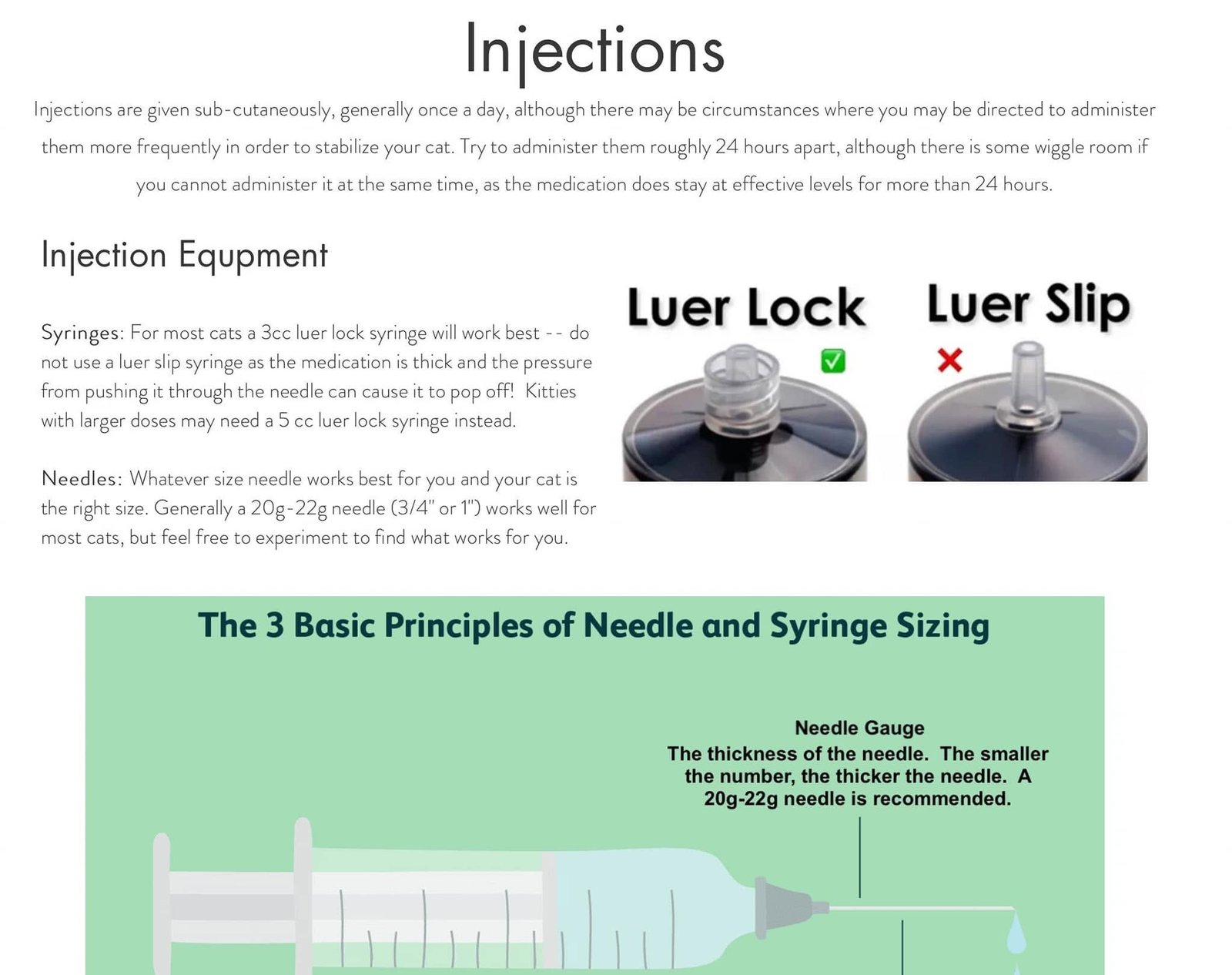
Injections are given sub-cutaneously, generally once a day, although there may be circumstances where you may be directed to administer them more frequently in order to stabilize your cat. Try to administer them roughly 24 hours apart, although there is some wiggle room if you cannot administer it at the same time, as the medication does stay at effective levels for more than 24 hours.
Injection Equipment
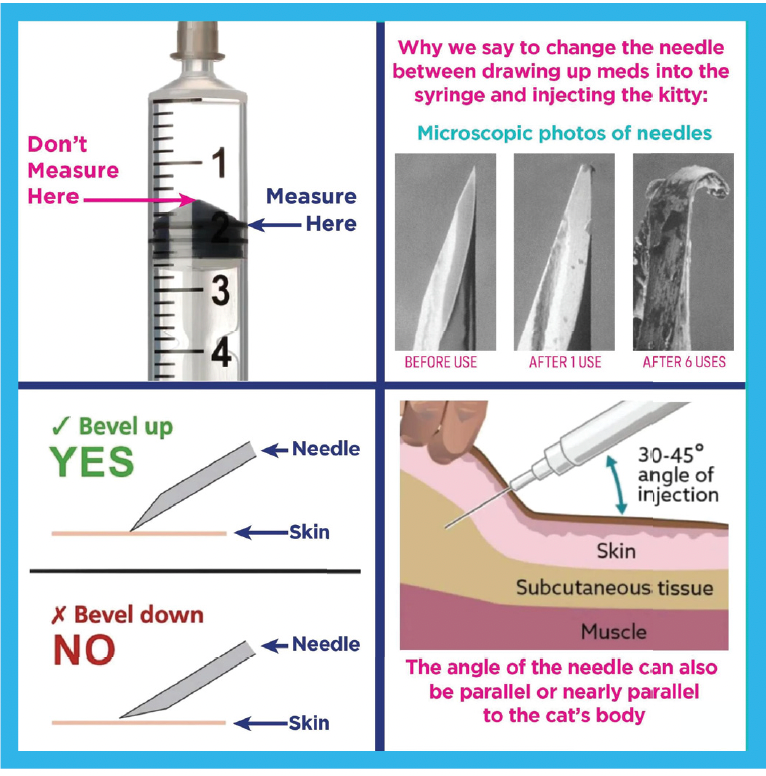
Syringes: For most cats a 3cc luer lock syringe will work best — do not use a luer slip syringe as the medication is thick and the pressure from pushing it through the needle can cause it to pop off! Kitties with larger doses may need a 5 cc luer lock syringe instead.
Needles: Whatever size needle works best for you and your cat is the right size. Generally a 20g-22g needle (3/4″ or 1″) works well for most cats, but feel free to experiment to find what works for you.
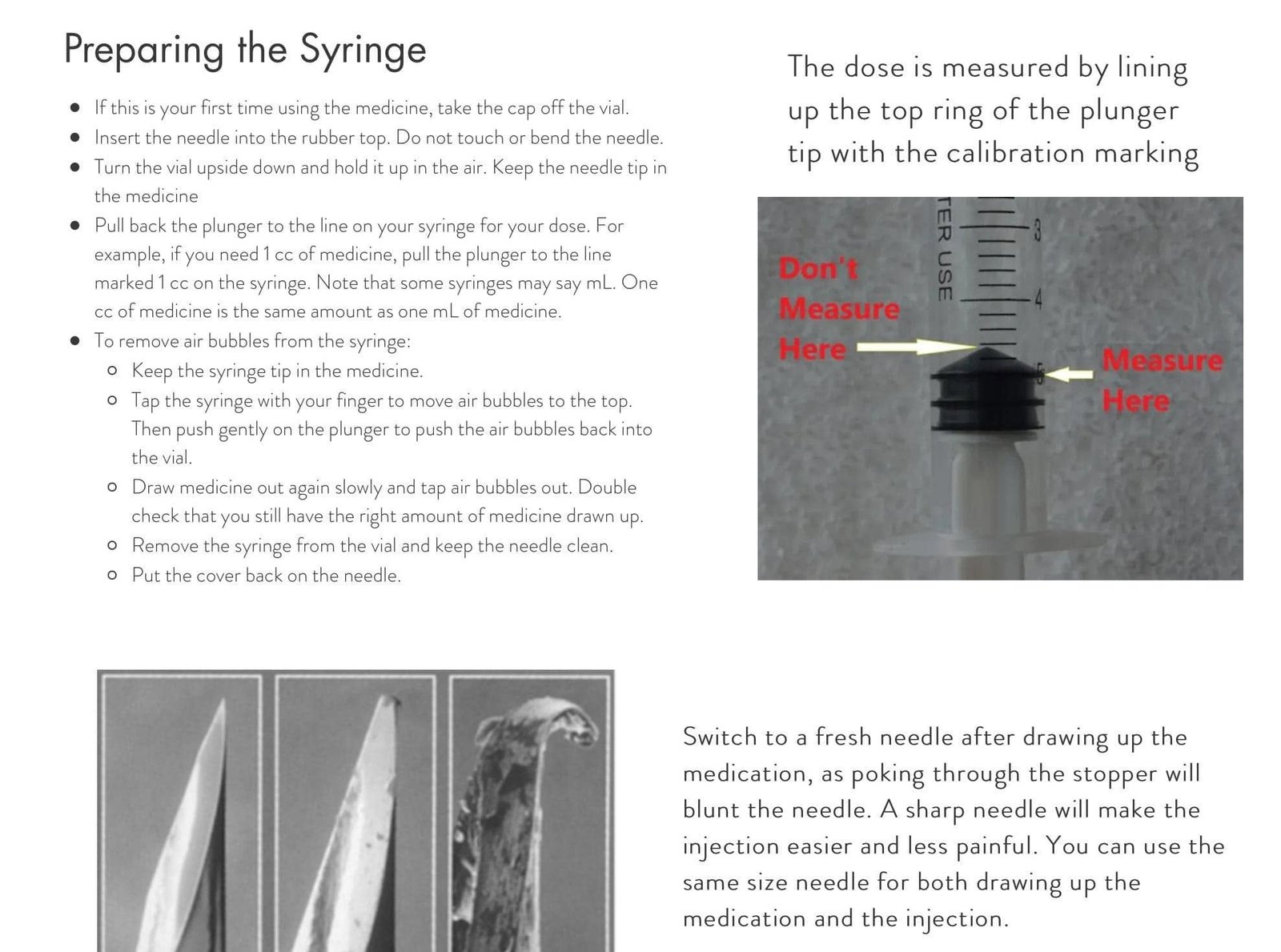
Preparing the Syringe
If this is your first time using the medicine, take the cap off the vial.
Insert the needle into the rubber top. Do not touch or bend the needle.
Turn the vial upside down and hold it up in the air. Keep the needle tip in the medicine
Pull back the plunger to the line on your syringe for your dose. For example, if you need 1 cc of medicine, pull the plunger to the line marked 1 cc on the syringe. Note that some syringes may say mL. One cc of medicine is the same amount as one mL of medicine.
To remove air bubbles from the syringe:
Keep the syringe tip in the medicine.
Tap the syringe with your finger to move air bubbles to the top. Then push gently on the plunger to push the air bubbles back into the vial.
Draw medicine out again slowly and tap air bubbles out. Double check that you still have the right amount of medicine drawn up.
Remove the syringe from the vial and keep the needle clean.
https://youtu.be/Ch1murqNz7M
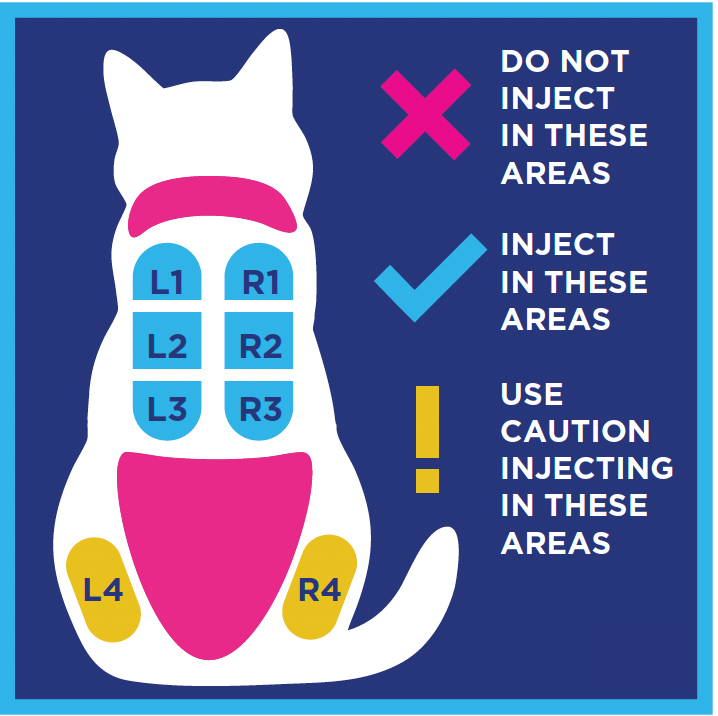
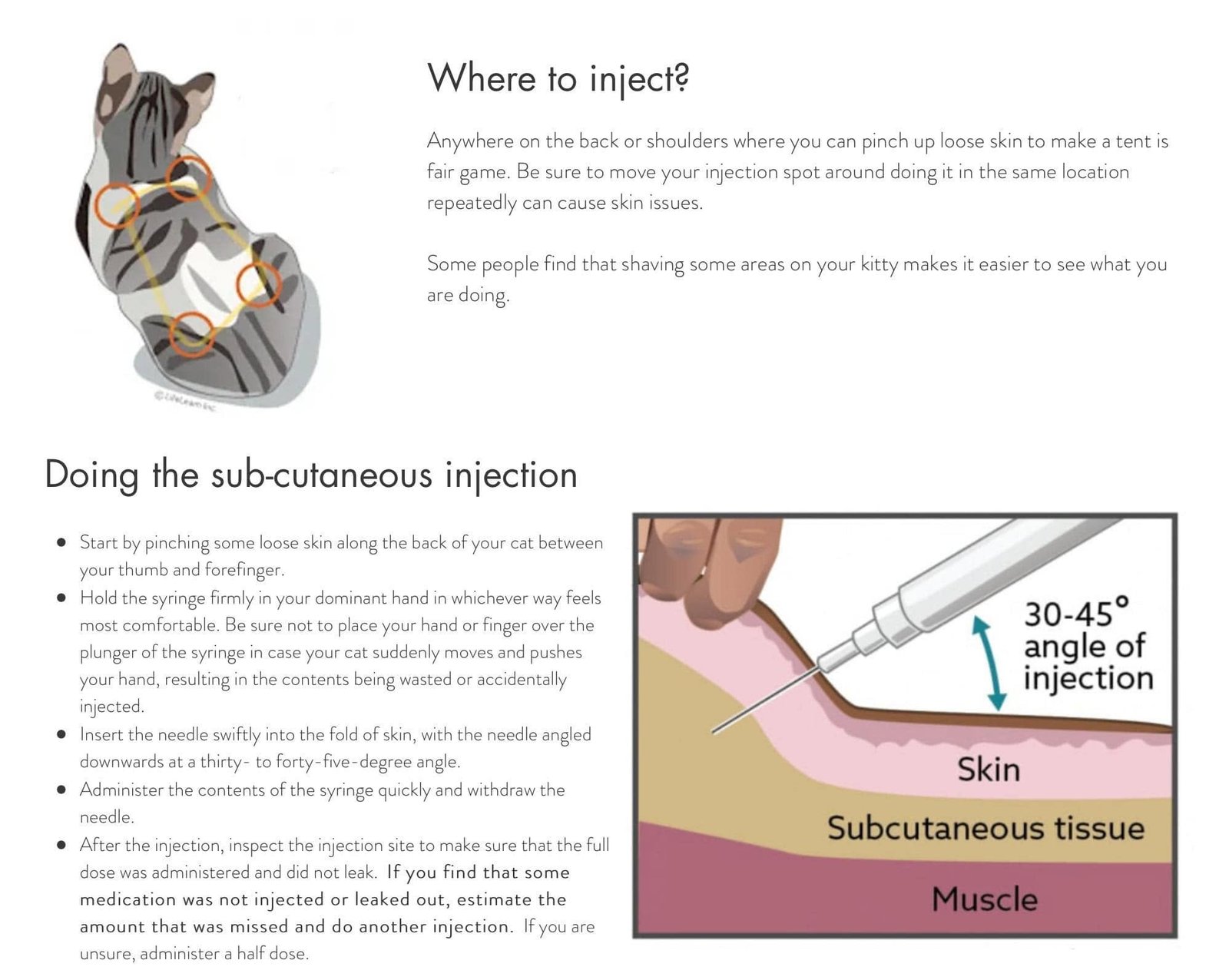
Where to inject?
Anywhere on the back or shoulders where you can pinch up loose skin to make a tent is fair game. Be sure to move your injection spot around doing it in the same location repeatedly can cause skin issues.
Some people find that shaving some areas on your kitty makes it easier to see what you are doing.
Doing the sub-cutaneous injection
Start by pinching some loose skin along the back of your cat between your thumb and forefinger.
Hold the syringe firmly in your dominant hand in whichever way feels most comfortable. Be sure not to place your hand or finger over the plunger of the syringe in case your cat suddenly moves and pushes your hand, resulting in the contents being wasted or accidentally injected.
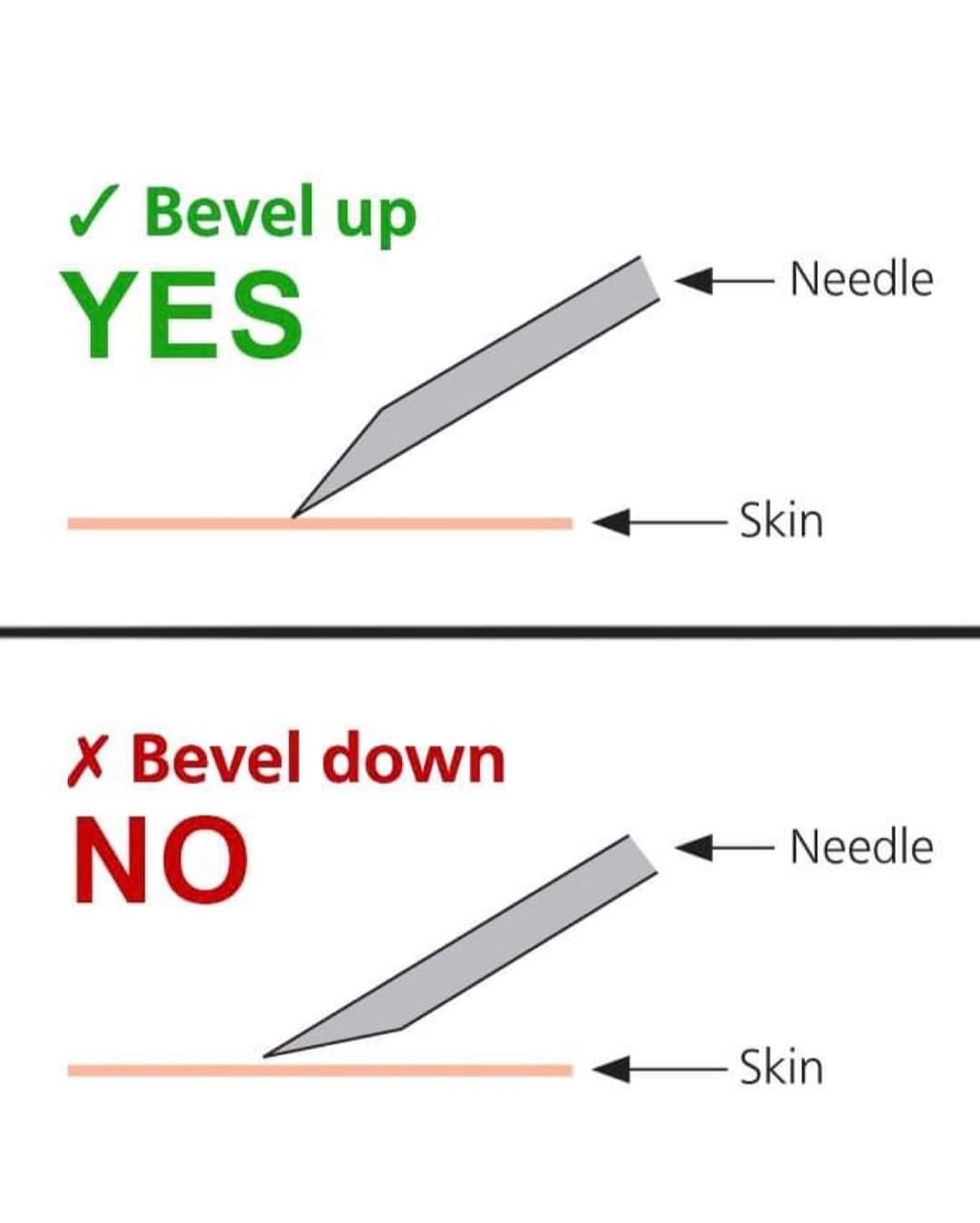
Insert the needle swiftly into the fold of skin, with the needle angled downwards at a thirty- to forty-five-degree angle.
Administer the contents of the syringe quickly and withdraw the needle.
After the injection, inspect the injection site to make sure that the full dose was administered and did not leak. If you find that some medication was not injected or leaked out, estimate the amount that was missed and do another injection. If you are unsure, administer a half dose.
A still cat allows for the best injection. All cats react differently when being injected. Some cats are soothed by swaddling while others are better being distracted by their favorite treat. Some cats need full restraint to prevent injury to themselves or the person injecting. You may find that one technique works better in the beginning and a need to use another technique as your cat feels better and gains strength and energy. Regardless of which technique works best, being calm throughout the injection process goes a long way.
Try this hold technique called the arm bar. It opens up the whole side of the cat for injections and gives support to their back.
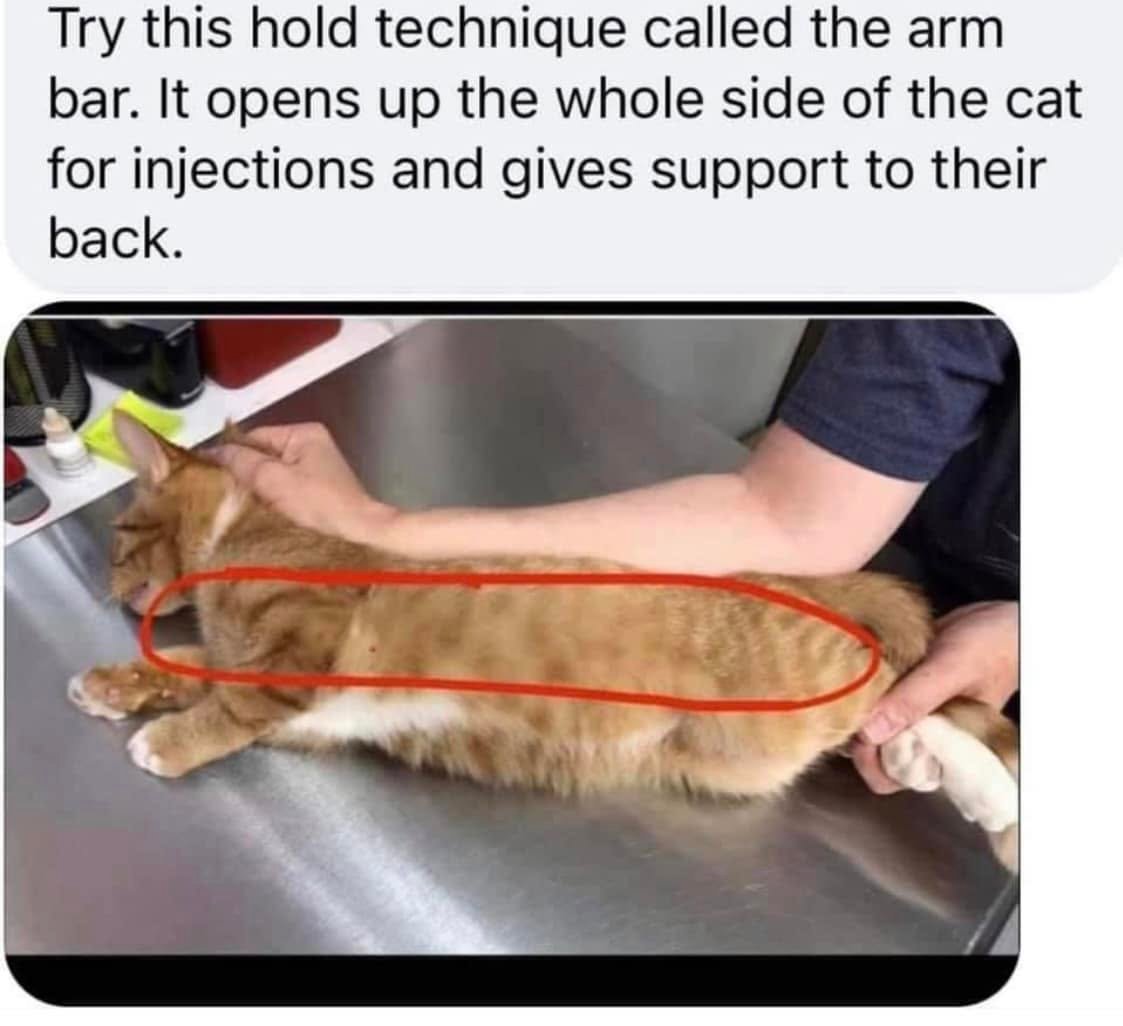
It is key to hold rear legs and scruff firmly to prevent movement. A still cat gets the injection done quickly. Calm and steady.
Grooming bag with zippered back allowing full access of injection area. Bag should not be too big to prevent cat from moving about in bag. Object is to have a still cat for the injection. It is always recommended to use a cone with cats who are prone to bite.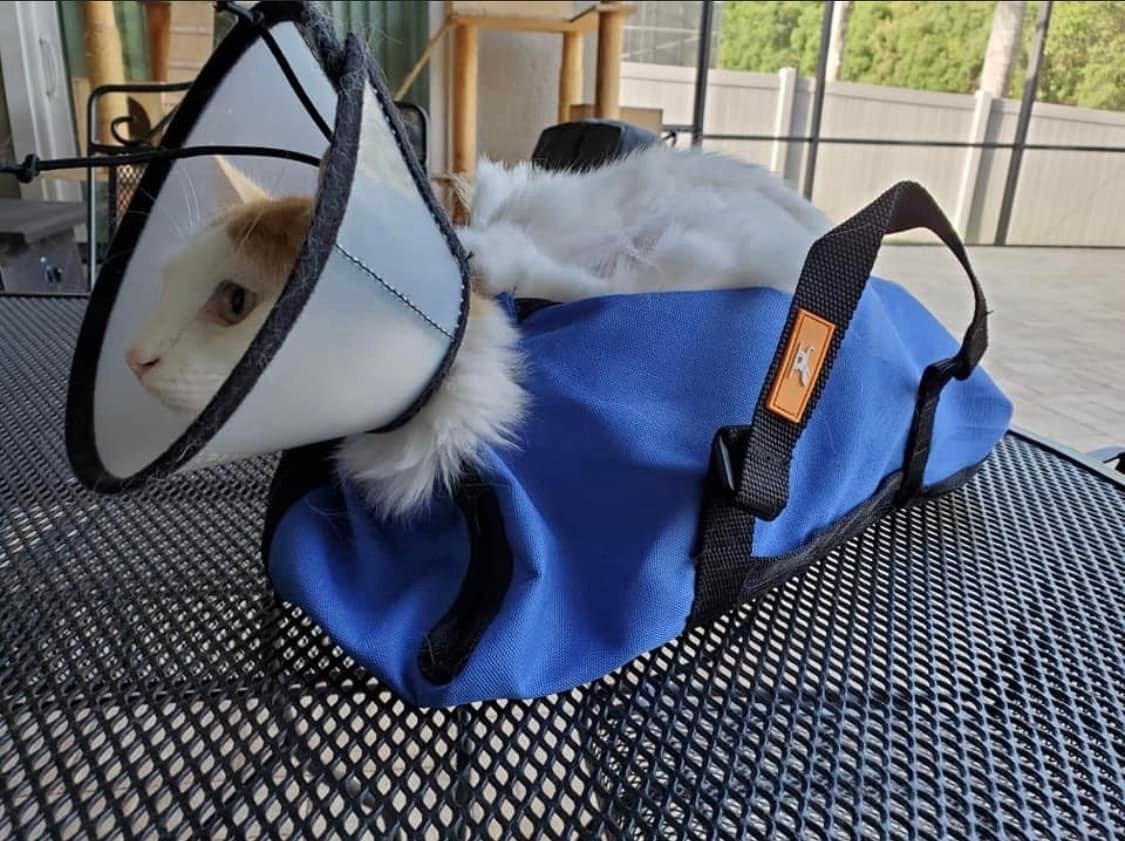
Yes! FIP is Treatable!
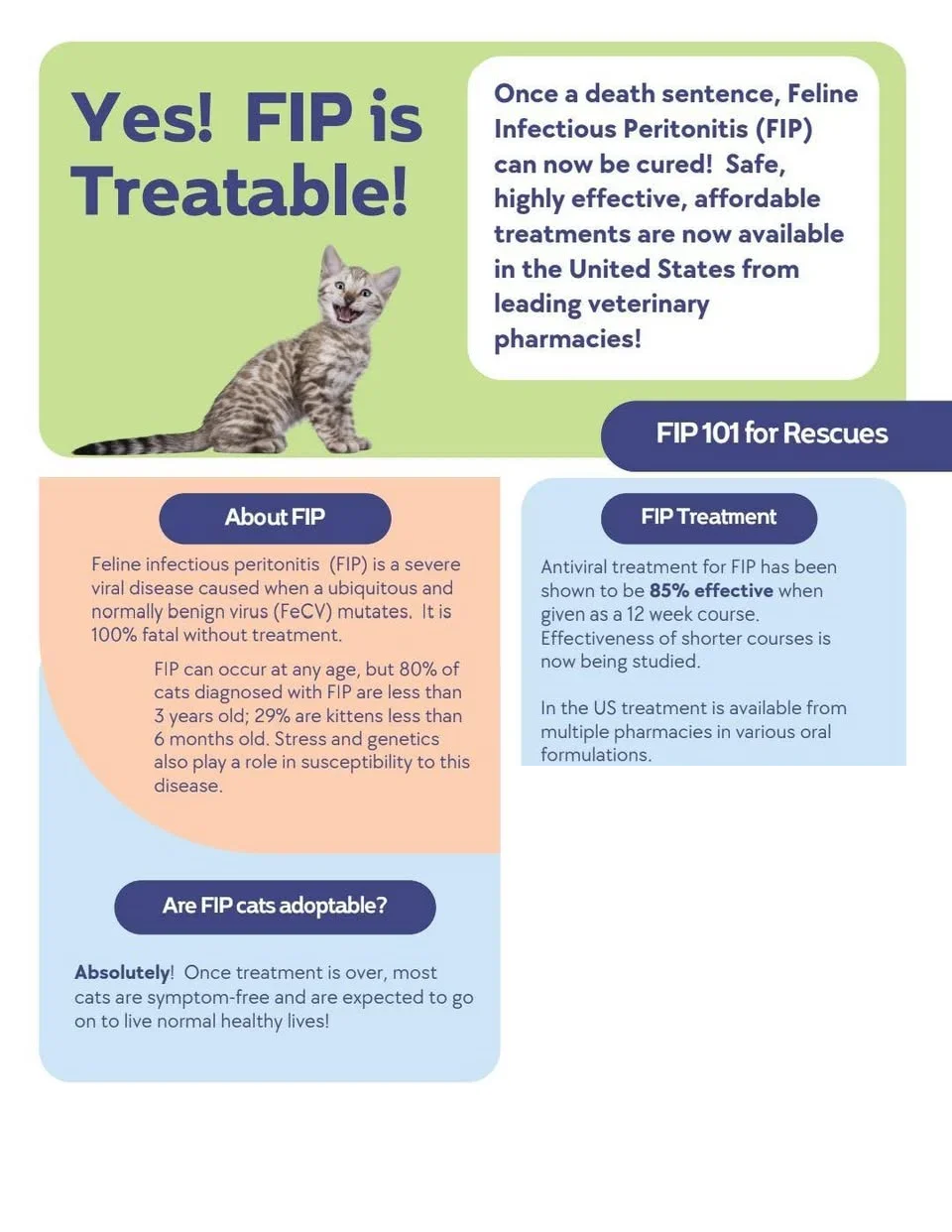
Once a death sentence, Feline Infectious Peritonitis (FIP) can now be cured! Safe, highly effective, affordable treatments are now available in the United States from leading veterinary pharmacies!
About FIP: Feline infectious peritonitis (FIP) is a severe viral disease caused when a ubiquitous and normally benign virus (FeCV) mutates. It is 100% fatal without treatment. FIP can occur at any age, but 80% of cats diagnosed with FIP are less than 3 years old; 29% are kittens less than 6 months old. Stress and genetics also play a role in susceptibility to this disease.
FIP Treatment: Antiviral treatment for FIP has been shown to be 85% effective when given as a 12 week course. Effectiveness of shorter courses is now being studied. In the US treatment is available from multiple pharmacies in various oral formulations.
Are FIP cats adoptable? Absolutely! Once treatment is over, most cats are symptom-free and are expected to go on to live normal healthy lives!
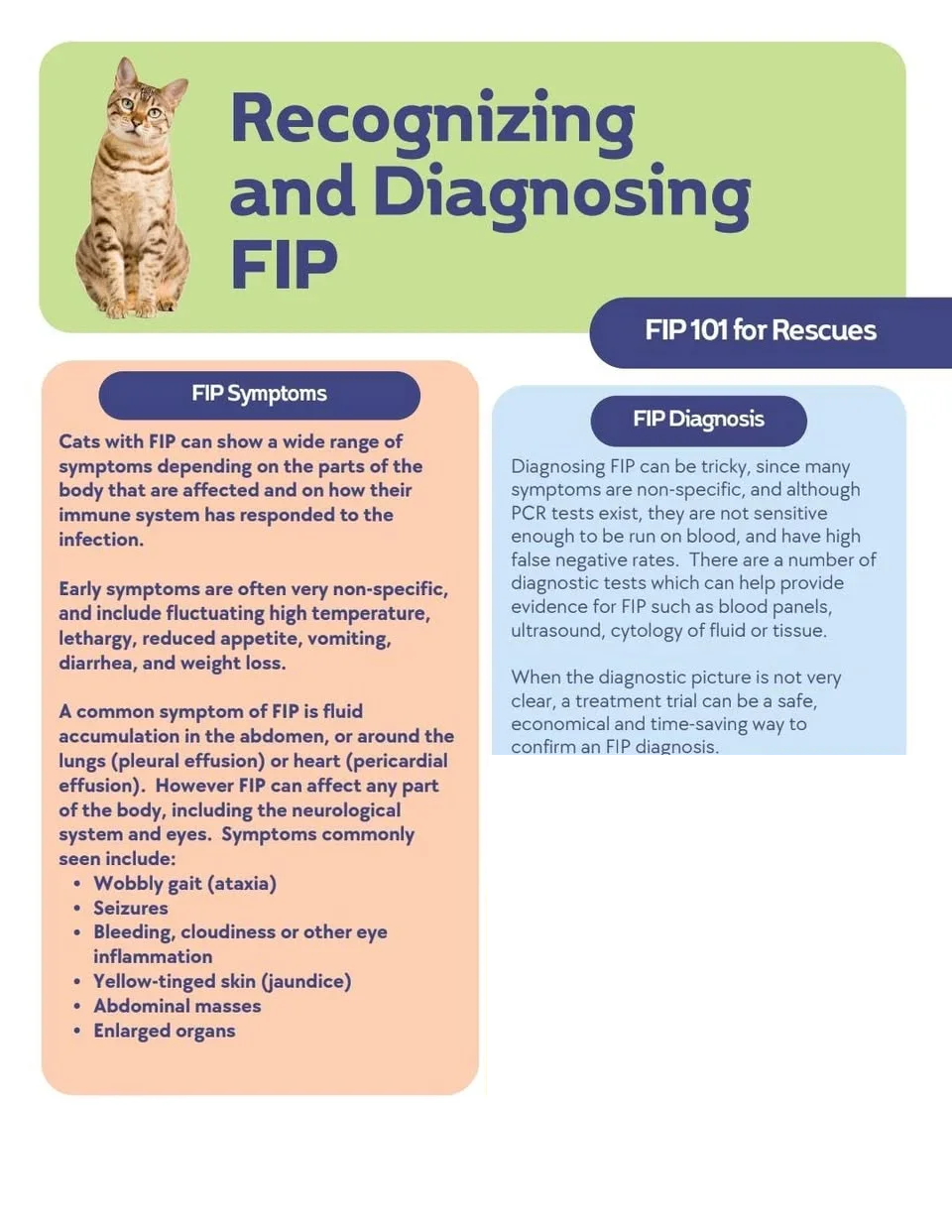
Recognizing and Diagnosing FIP
FIP Symptoms: Cats with FIP can show a wide range of symptoms depending on the parts of the body that are affected and on how their immune system has responded to the infection. Early symptoms are often very non-specific, and include fluctuating high temperature, lethargy, reduced appetite, vomiting, diarrhea, and weight loss. A common symptom of FIP is fluid accumulation in the abdomen, or around the lungs (pleural effusion) or heart (pericardial effusion). However FIP can affect any part of the body, including the neurological system and eyes. Symptoms commonly seen include:
Wobbly gait (ataxia)
Seizures
Bleeding, cloudiness or other eye inflammation
Yellow-tinged skin (jaundice)
Abdominal masses
Enlarged organs
FIP Diagnosis: Diagnosing FIP can be tricky, since many symptoms are non-specific, and although PCR tests exist, they are not sensitive enough to be run on blood, and have high false negative rates. There are a number of diagnostic tests which can help provide evidence for FIP such as blood panels, ultrasound, cytology of fluid or tissue. When the diagnostic picture is not very clear, a treatment trial can be a safe, economical and time-saving way to confirm an FIP diagnosis.
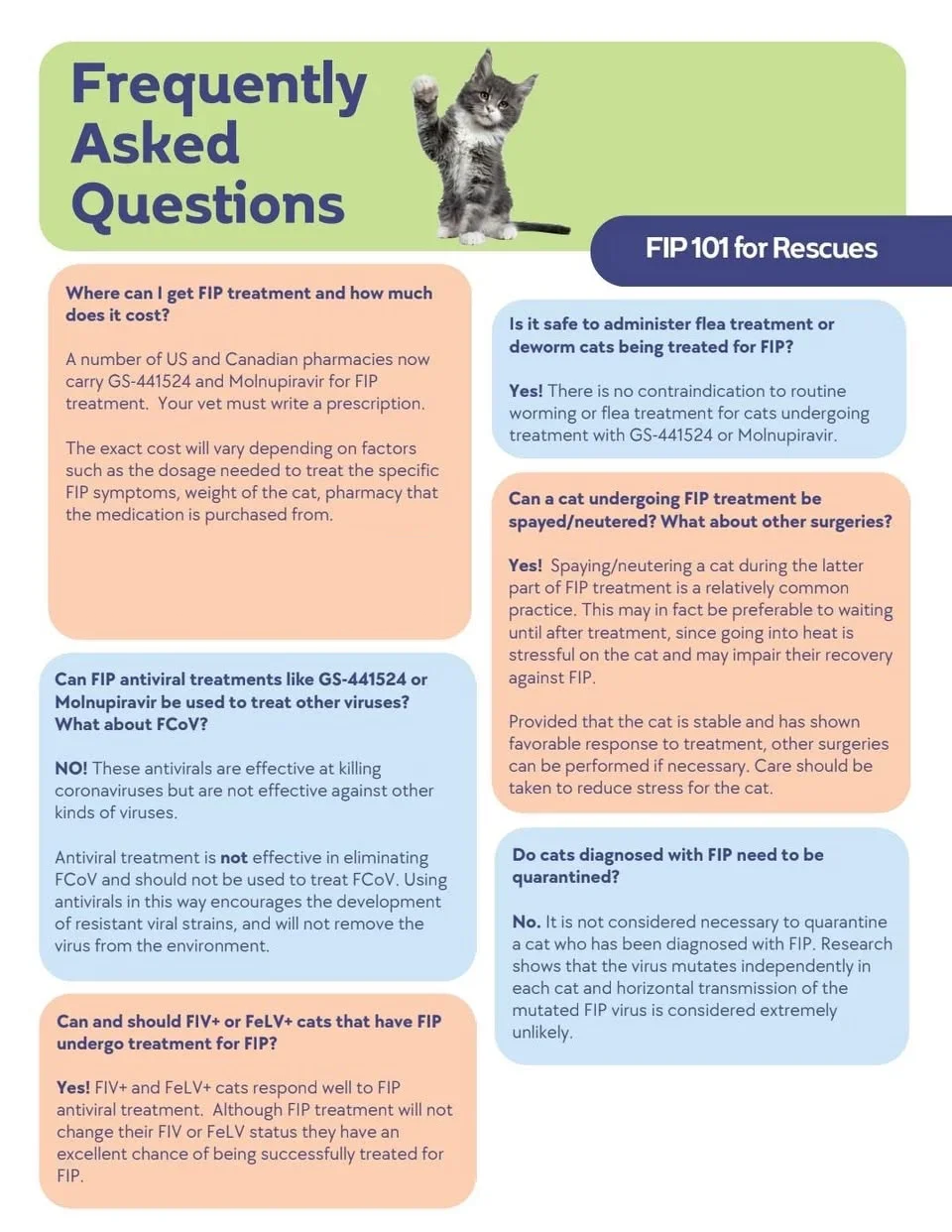
Frequently Asked Questions
Where can I get FIP treatment and how much does it cost? A number of US and Canadian pharmacies now carry GS-441524 and Molnupiravir for FIP treatment. Your vet must write a prescription. The exact cost will vary depending on factors such as the dosage needed to treat the specific FIP symptoms, weight of the cat, pharmacy that the medication is purchased from.
Can FIP antiviral treatments like GS-441524 or Molnupiravir be used to treat other viruses? What about FCoV? NO! These antivirals are effective at killing coronaviruses but are not effective against other kinds of viruses. Antiviral treatment is not effective in eliminating FCoV and should not be used to treat FCoV. Using antivirals in this way encourages the development of resistant viral strains, and will not remove the virus from the environment.
Can and should FIV+ or FeLV+ cats that have FIP undergo treatment for FIP? Yes! FIV+ and FeLV+ cats respond well to FIP antiviral treatment. Although FIP treatment will not change their FIV or FeLV status they have an excellent chance of being successfully treated for FIP.
Is it safe to administer flea treatment or deworm cats being treated for FIP? Yes! There is no contraindication to routine worming or flea treatment for cats undergoing treatment with GS-441524 or Molnupiravir.
Can a cat undergoing FIP treatment be spayed/neutered? What about other surgeries? Yes! Spaying/neutering a cat during the latter part of FIP treatment is a relatively common practice. This may in fact be preferable to waiting until after treatment, since going into heat is stressful on the cat and may impair their recovery against FIP. Provided that the cat is stable and has shown favorable response to treatment, other surgeries can be performed if necessary. Care should be taken to reduce stress for the cat.
Do cats diagnosed with FIP need to be quarantined? No. It is not considered necessary to quarantine a cat who has been diagnosed with FIP. Research shows that the virus mutates independently in each cat and horizontal transmission of the mutated FIP virus is considered extremely unlikely.
Direct sunlight exposure
Vials shouldn’t be refrigerated as it may cause liquid crystallisation .. reducing the efficiency of our gs brand
Expiration: our brand has 2 years Expiration period from the date of manufacture..
Inappropriate use of GS-441524 in an attempt to eliminate Feline Enteric Coronavirus (FECV) from healthy cats
JANUARY 2020